
The Great Salt Lake and the GRP
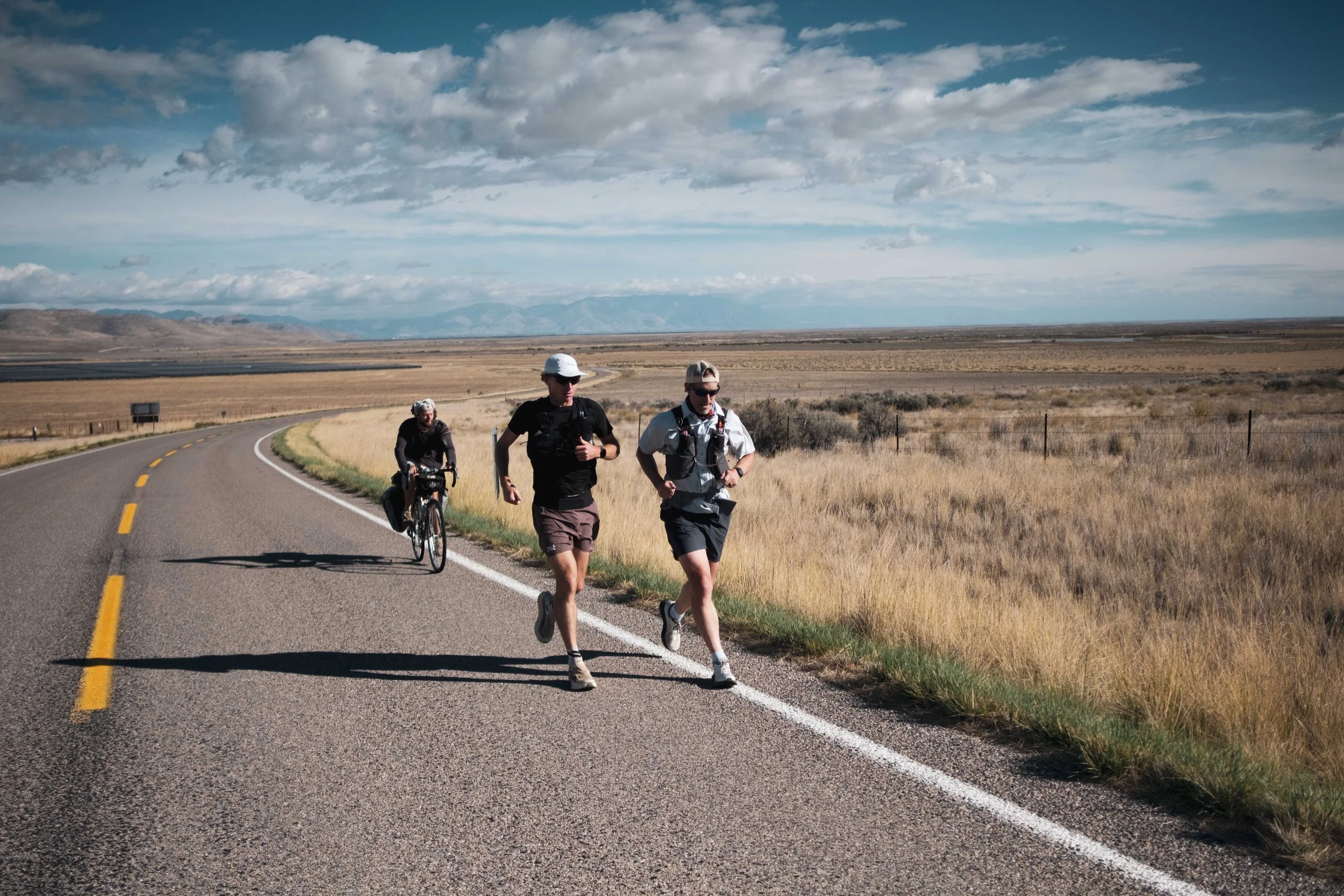
Running the road around the Great Salt Lake. Photo: Nick Danielson
By Running Program Director, Dakota Jones
I need to admit something: I have a bit of elitist pride in being from Utah. Craftsbury is obviously incredible, and the Northeast is a wonderful place to live. But I think we all have a cultural conception that the “real mountains” are Out West, and I fall victim to that kind of superior thinking despite my best intentions. I’m from mountains, desert, open space, long views, and big distances. The Green Mountains are great, but they’re nothing like where I’m from.
So it was a bit embarrassing to invite the Green Racing Project’s skiers to join me on the worst run imaginable last month. They pulled up on me as I jogged through a subdivision between two freeways in northern Utah. Annika Martell, GRP Snow’s Supreme Leader, was driving a small Subaru, and she pulled over to let Logan Moore and Brian Bushey out. They were already dressed for running, carrying packs with food and water. They had come to run a long way.
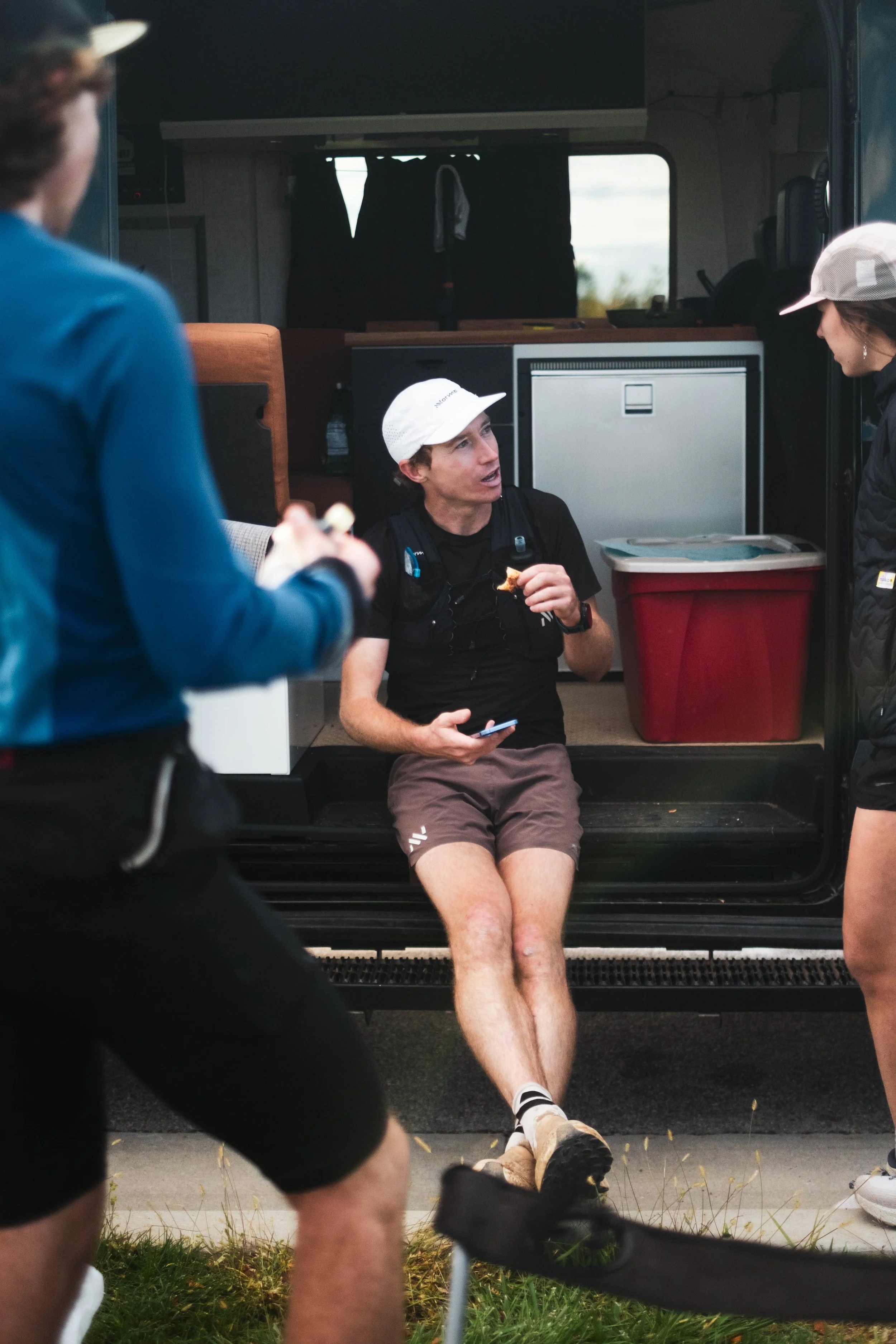
Annika, Logan and Brian connect with Dakota and the run in northern Utah. Photo: Nick Danielson
They didn’t come to join me (just) because I’m such a great guy. They came to be part of a project that was larger than any of us. The morning before, I had left the Utah State Capitol with a crowd of runners to run all the way around the Great Salt Lake over five days. The goal was to raise money and create action to protect the Lake, which has been drying up and receding for over thirty years. During the last few years the Lake has lingered on the edge of ecosystem collapse, threatening a critical migration corridor for ten million birds and a $2 billion annual industry of resource extraction. Worst of all, as the Lake dries up it exposes toxic heavy metals in the Lakebed, which become airborne as the wind blows and are then deposited onto the surfaces of Salt Lake City and into the lungs of its inhabitants.
There is plenty of water in northern Utah to protect the Lake and its industries and the many people and animals that rely on it for health and survival. The problem is that the water has been undervalued and overallocated for thirty years. The Great Salt Lake is the lowest point of the region (that’s why the water is salty: there’s no outflow) and everybody else takes their cut before they let the water go that far. As a result of agricultural excess, municipal growth, and climate aridification, not enough water has reached the Lake in recent years to preserve it. Despite promises from legislators to enforce rules protecting the Lake, they have thus far failed to take adequate action.
Logan and Brian settled in with my long distance pace and in an hour or so we came into Brigham City, Utah. At a public park the entire GRP ski team had gathered to welcome us, cheer us, and join in the run. I stopped for a few minutes to eat some food and prepare for the next section, and then we all grouped up and headed out en masse on a paved road. We headed up through a region of industrial factories and then turned onto a highway lined with heavy trucks. We ran on the shoulder of the left side of the road and our conversations paused each time a truck roared past.
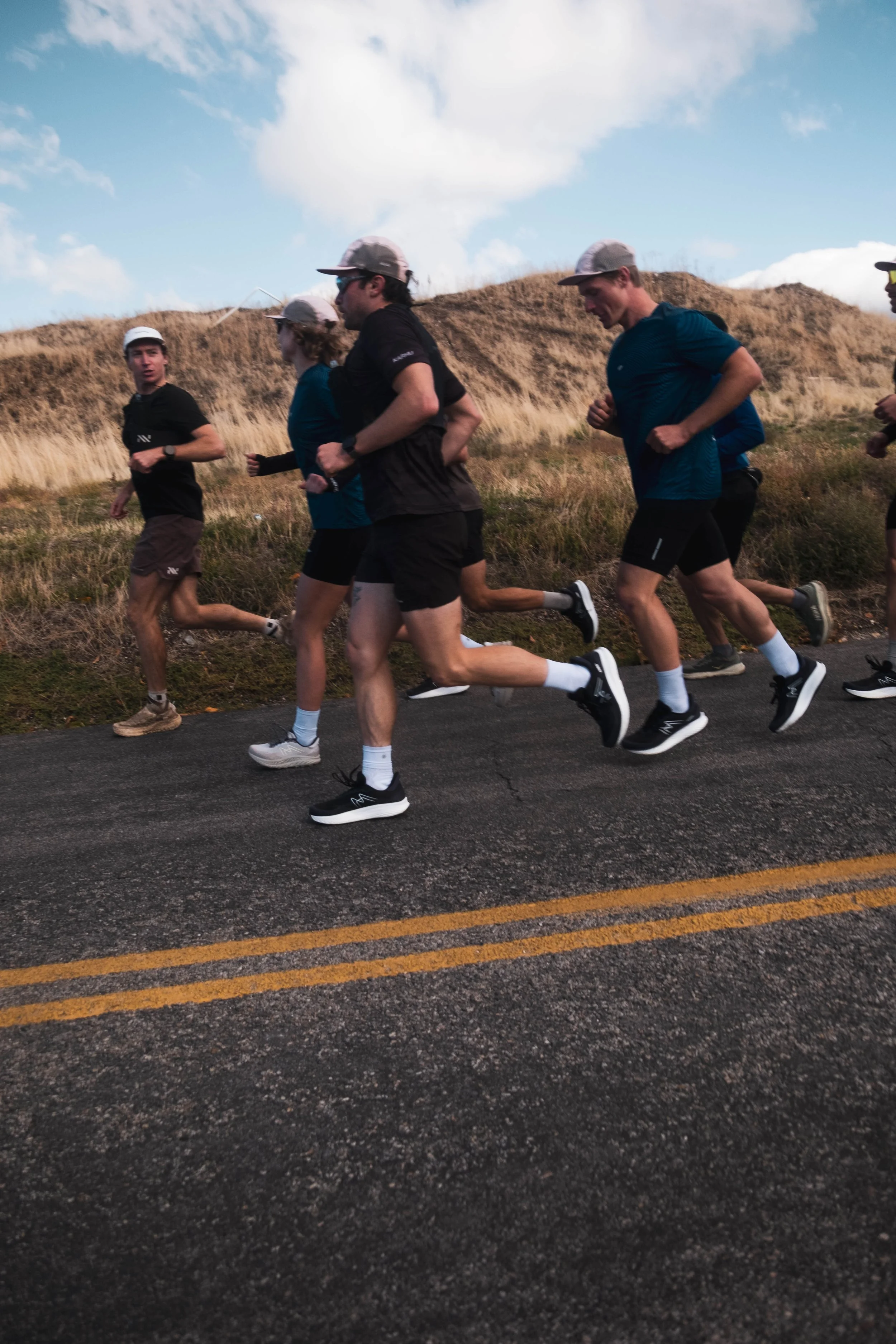
GRP Snow and friends running out of Brigham City. Photo: Nick Danielson
We were on this terrible road simply because there were no other options in this part of Utah. Despite the Great Salt Lake being the namesake of Utah’s largest city and an internationally recognized landmark, most people from the area don’t go to the Lake or know much about it. Most people go to the mountains on the other side of the valley, and they dismiss the Lake as smelly, buggy, salty, shallow, hot, boring, or anything else. People who know what they’re doing understand that the wetlands on its shores provide some of the best birdwatching (or bird hunting) in the West, and the contrast between mountain and Lake, saltwater and freshwater, light and shade, all provide some of the most incredible outdoor experiences imaginable. But because the Lake is not frequented, there is not a great system of infrastructure for going around the Lake. To my knowledge we were the first people to run all the way around it in one go, and that meant we had to follow some pretty unpleasant roads.
In characteristic fashion, the GRP was cheerful. I was legitimately ashamed to make them run those roads, but as I jogged along the soft gravel of the shoulder and hunched my shoulders when trucks went past, I also listened to a stream of jokes and trash talk that made the experience much lighter than it would have been otherwise. I tried to apologize and they shot me down every time. “We want to be here!” “This is worth it.” “This is a good cause.”
All of the biathletes had raced a critical qualifying race just a few days earlier. The skiers were headed into a major race the next weekend. As a whole, the team was in Utah to live and train at altitude in Park City. But they saw my project as a way of following through on the promises we all make as members of the GRP: the promise that competition is not enough if we don’t also find ways to give back to the people and the world around us. Most teams focus only on the ways to make their athletes better. By providing a broader focus, the GRP allows its athletes the best chances of success while reinforcing their connection to people and place. Our theory is that this makes athletes even more likely to succeed by having a greater sense of purpose.
The project to run around the Great Salt Lake was called Where the Water Was. We partnered with four local organizations working to save the Lake, and all money raised went to them. We came up with three specific calls to action for our followers to accomplish that would make a difference for the Lake. We shot photos and video to invite people into the story of the run so they could learn about both the Great Salt Lake and how to create a similar project where they live. The goal was to help people interact with the Lake either in person or online and learn how to protect it for everyone.
Sometimes all we need is to see other people doing something first. Then we can be brave enough to join in. From the start, the run was meant to include the community. I asked people to join me and over the course of five days we had over 70 runners and cyclists do so. This was especially convenient because I had injured my foot a week before the run and was no longer able to run the whole thing myself. By turning the run from a huge personal accomplishment into a collective relay, we were able to mirror the work that needs to be done to protect the Great Salt Lake. Big social and environmental issues do not need a single heroic champion. They need the consistent, passionate work of countless people over time. By joining us for more than a marathon in the middle of a critical week of racing, the GRP demonstrated its commitment to making the world a better place through sport.
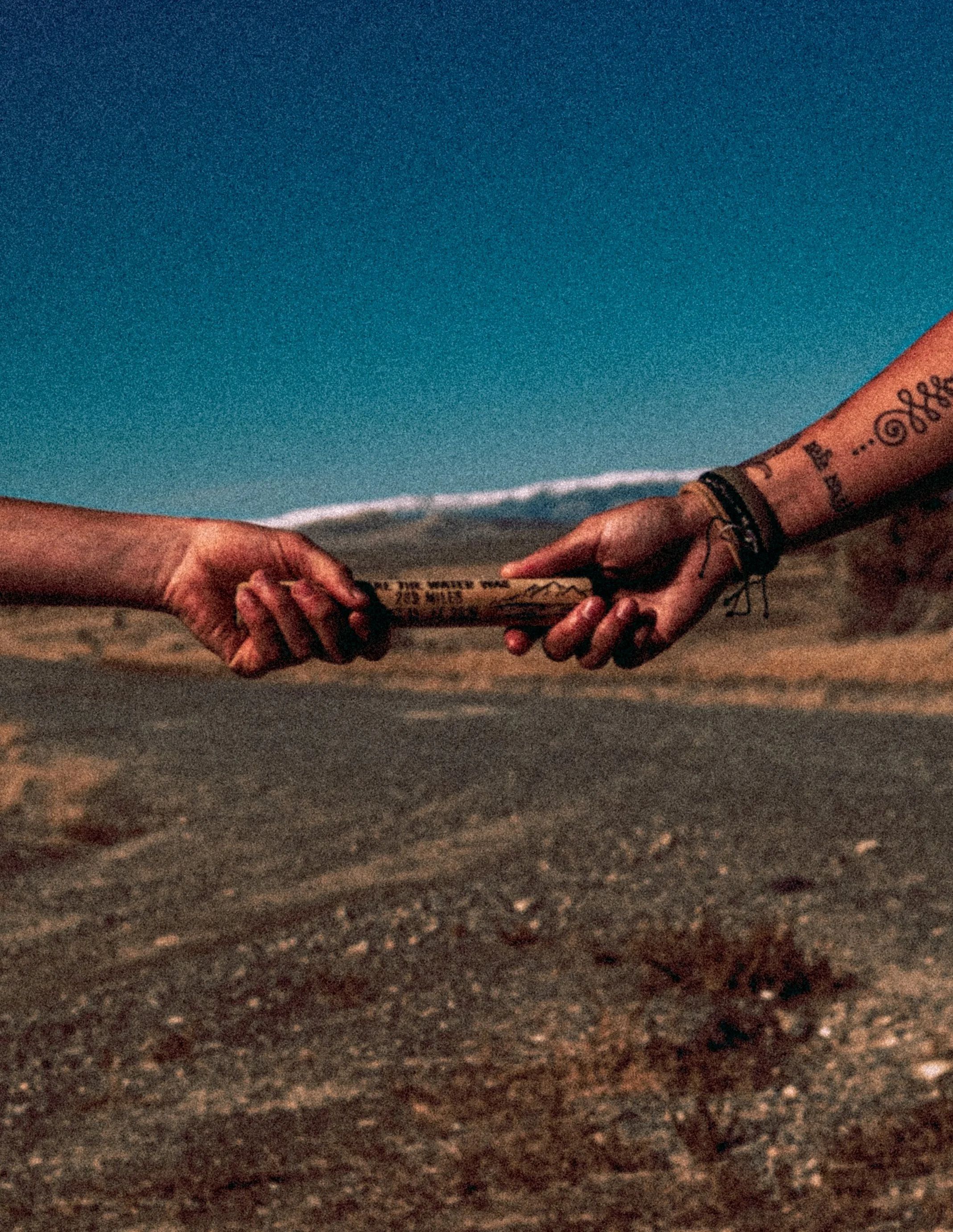
Passing the baton, Where the Water Was. Photo: Nick Danielson
But they sure do love sports. As we ran further northwest and steadily got away from the traffic, we found ourselves contouring around the base of a mountain. Distances out there are hard to judge, and the mountain had no trees or structures to provide a sense of scale. Logan made an offhand comment that he could run up the mountain at full speed in five minutes, which was met with outraged refusal from his teammates. Being an educated bunch, the GRPers threw around a bunch of numbers demonstrating Logan’s insanity in assuming he could accomplish such a Herculean feat. But this only further entrenched Logan, who argued fiercely that this was possible. I’d like this story to stand as a record that he committed to returning to that spot next spring after his ski season to attempt to run up that mountain in five minutes or less.
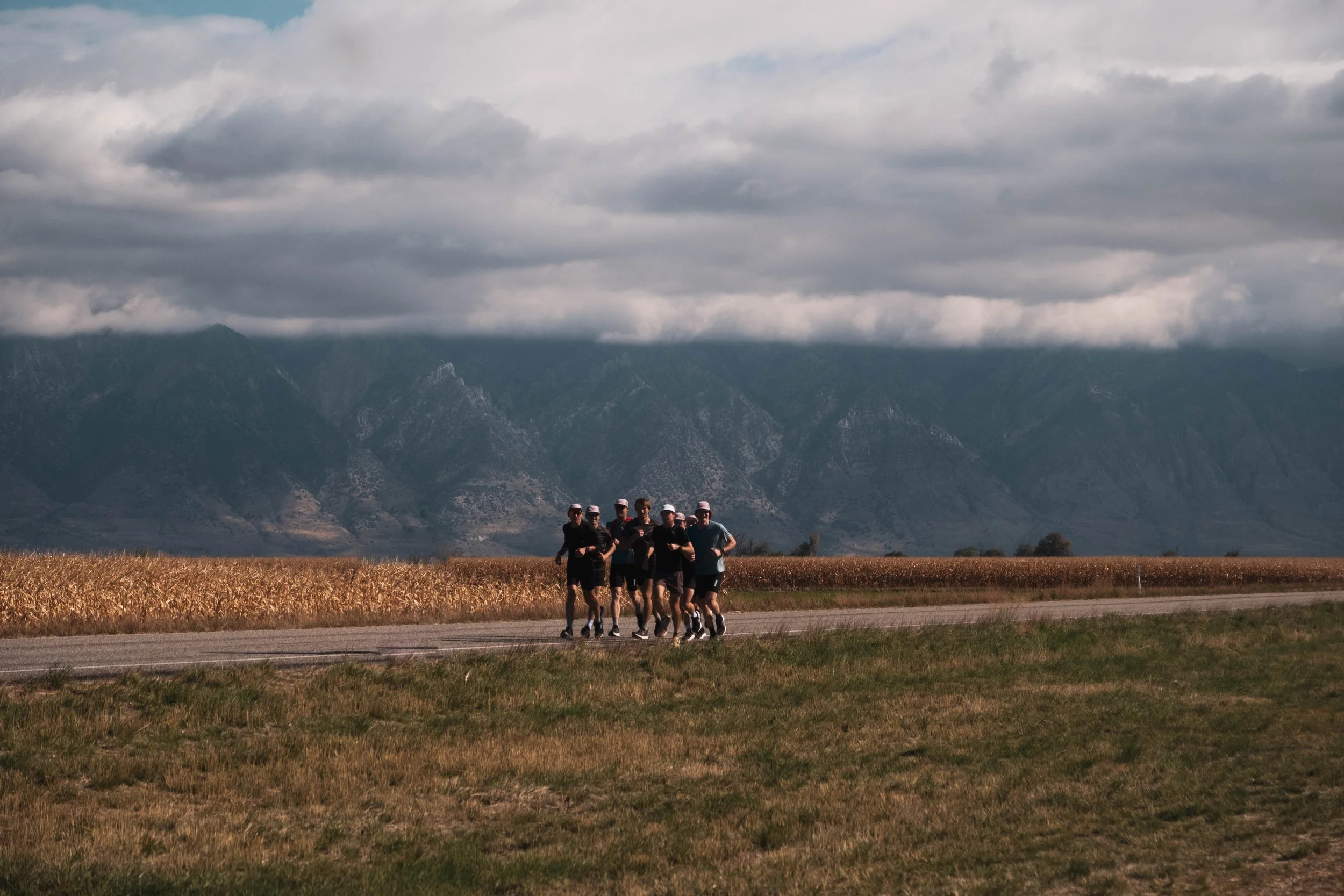
Logan’s mountains, and the runners who were not going to race up it that day. Photo: Nick Danielson
And while we can all rest assured that he’s wrong, I love the commitment he had to try anyway. There was no reason to think that my run around the Great Salt Lake would make any difference for the Lake either, but then we raised thousands of dollars and got dozens of people involved, including three state representatives who can legitimately make a difference. There is still so much work to do, but what we did mattered, and it mattered because so many people joined in and made it real. It felt like the start of something meaningful, and I’m excited to see what we can do for the Lake if we keep this work going.
Perhaps next year we’ll make a relay to go up Logan’s mountain. It might be possible to climb it in five minutes if enough people join in.
Where the Water Was was run with Footprints, the nonprofit Dakota co-founded.
Where the Water Was: runfootprints.org/where-the-water-was
Footprints: runfootprints.org and @footprintsrunning on Instagram
Dakota Jones: Substack and @thatdakotajones on Instagram
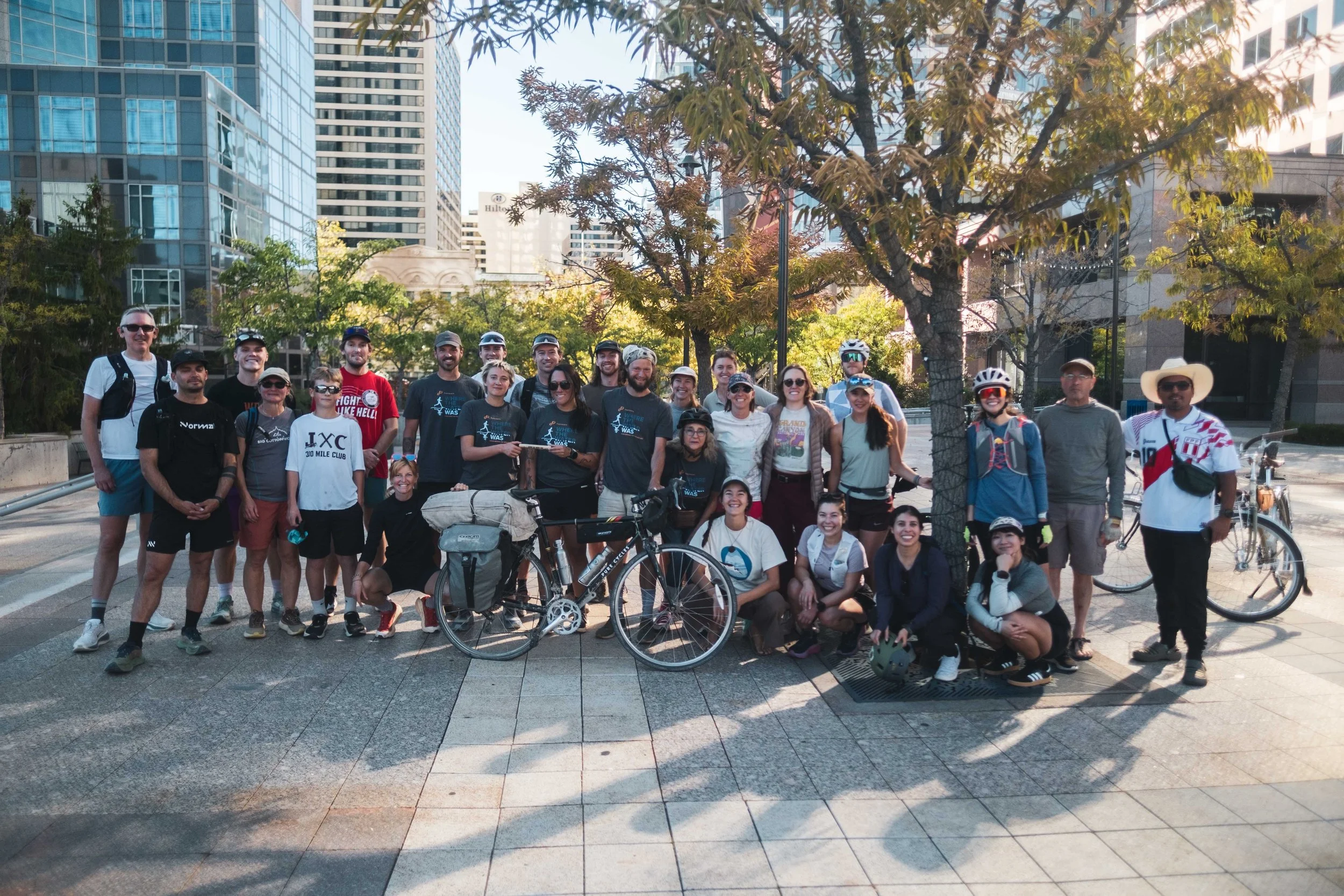
Runners and cyclists at the finish. Photo: Nick Danielson