
The "Winter is coming!" dryfire
by GRP Biathlete Luke Brown
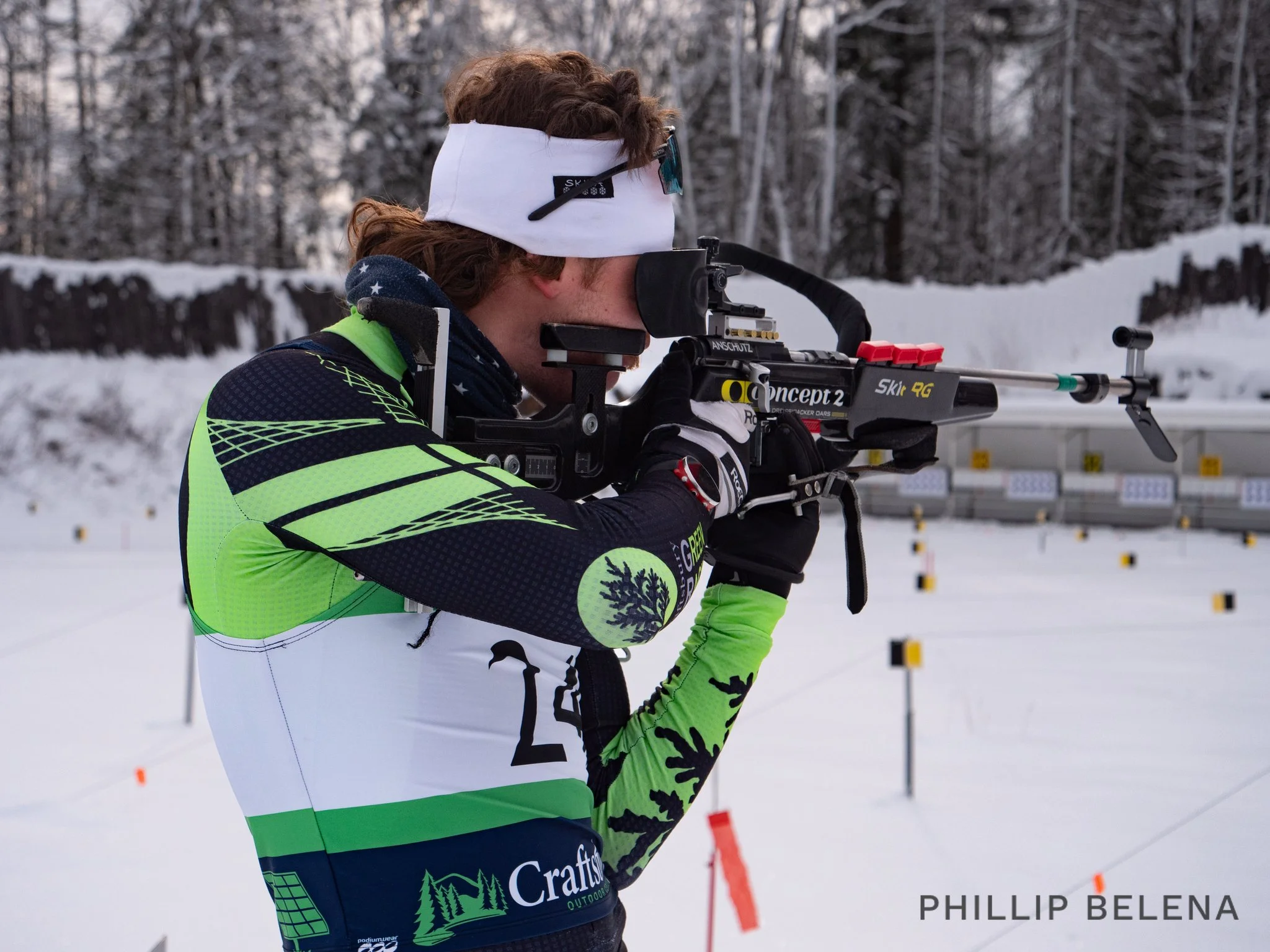
The first frost of the year brings with it my dream that one day I’ll see a rider on horseback galloping across the Outdoor Center’s upper field before the first snowfall yelling, “The winter is coming, the winter is coming!” This would-be modern Vermont version of Paul Revere would of course know that there will be a lot of cold rain ahead but he would also know that Dick Dreissigacker is in charge of our snowmaking and that God is good, so we simply must have snow ahead of us.
Hopefully, you’ve established a solid habit of 3-6 days a week with your rifle, pointing at small black dots in your bedroom or basement with NO AMMO loaded or anywhere near you. What better way to have fun and get better at the thing you love? But even if this habit has somehow eluded you thus far, it’s not too late! If you start now, I wouldn’t even call it cramming. But that’ll be a different story if you wait till December.
How to get ready for winter with dryfire?
If you haven’t been dryfiring, then the answer is to start. If you have, then the answer is to make it more specific.
Just like in physical training, where we build a base during the spring, load on fitness in the summer, and then head toward fine tuning in the fall and early winter, shooting training should also become more racing specific with a fine tuning focus at this time of year.
Holds (pointing at a black dot for a given length of time and just holding your rifle in position) can be the equivalent of skiing distance sessions. Single shots are like specific strength, and race pace 5 across practice are your intervals.
So, to make our dryfire more specific, you can:
1) Incorporate more race pace 5 across shooting. Still designate a couple days in the week to do holds, to maintain the base you have built, but this is the time of year to work more on moving between targets. Focus on how you breath in between shots, how your bolting either does or doesn’t move you between targets, and how you load the trigger after bolting and before fine aiming.
2) Work on your race shooting mentality. What will you be thinking of as you approach the range in a race? Practice that as you take your rifle off your back during dryfire.
3) Visualize. Pick a race and venue that you are excited to race at this winter. Imagine the range approach, the range, what the wind could be like, what point you might shoot on, the type of race, etc… visualize this before you start a dryfire magazine, putting yourself in the environment you want to prepare for and then practice executing in dryfire what you want to during that race!
4) Wear your race suit. There’s no better way to get fired up for racing while also dialing in exactly what your position might feel like in the uniform you’ll be wearing to race. Sometimes different racing tops stick or slip in different ways. Wearing more clothing could make your position feel tighter or it could make your rifle just a bit harder to control. Try it out to get used to it!
That’s all I’ve got for now. Best wishes as you continue to prepare for winter racing and remember, winter is coming!