
Building Confidence on an Unfamiliar Course
by GRP Skier Jack Young
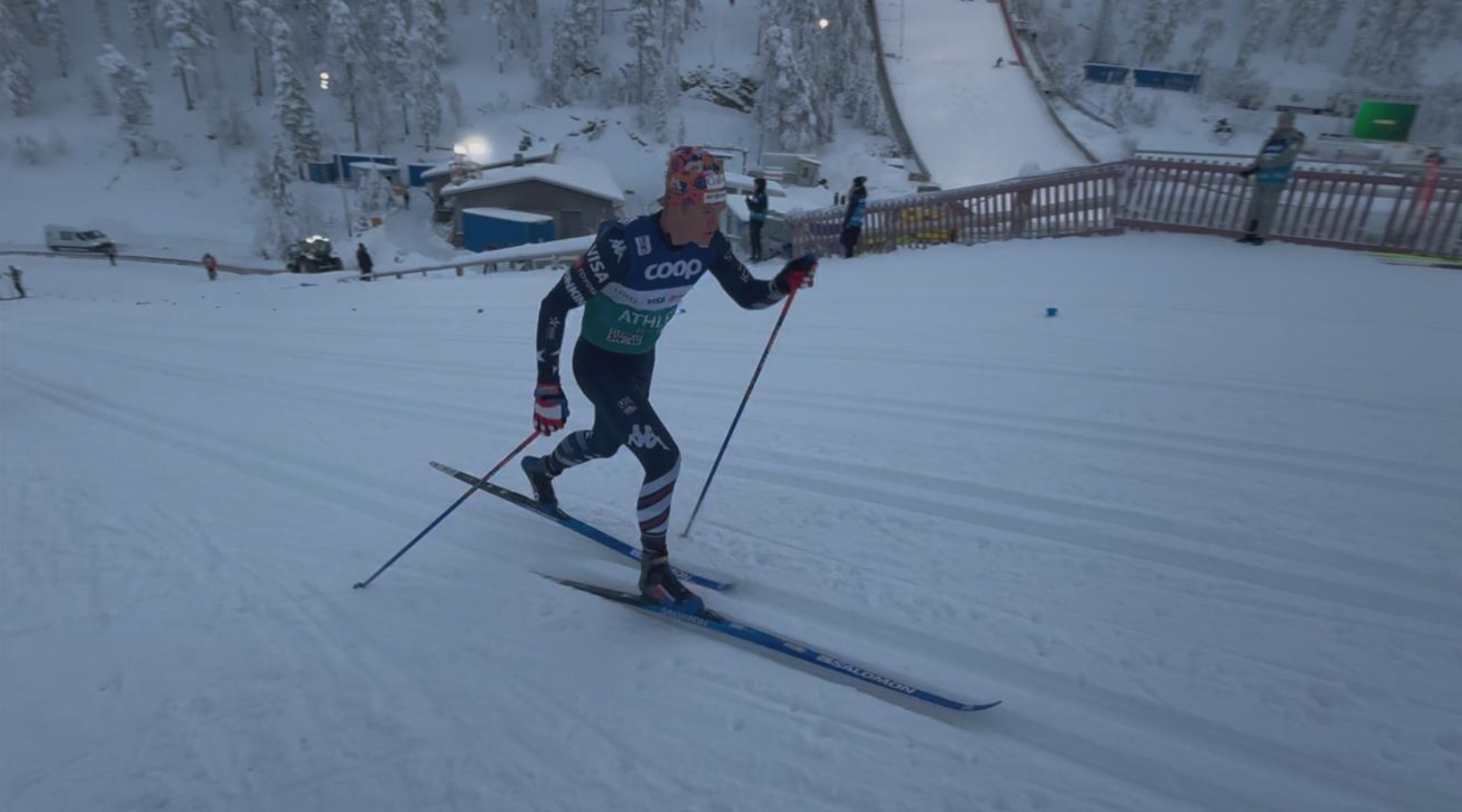
Home course advantage. Most skiers are familiar with this concept. When you are racing at home, or on a course that you have skied countless times, you know exactly what to expect around every bend and over the crest of every hill. This knowledge of a course profile that only comes from having skied a course many times can have significant impacts on results. When an athlete knows exactly how hard they can push on a specific climb and still have enough left to ski the rest of the course well, they have an advantage over an athlete who has less knowledge of the course. What I aim to talk about in this post is what we can do as athletes to mitigate the disadvantage that comes with racing at a new venue - specifically for sprint racing although most of these ideas can be expanded to help with any distance of race. This weekend, I am racing in Ruka, Finland for the first time, so the experience of learning a new course is quite fresh in my mind.
I arrived in Ruka on Tuesday, was able to train on Wednesday, and I will race on Saturday. This is more time than a lot of skiers will generally have to figure out a new course, but if you do find yourself at the venue with three full days of training before a race, here is what I would focus on:
Easy Day for Inspection and Short Speed
One could argue that hard intervals on the first day, an easy day, and then race prep would be the ideal way to attack this week, but with how my training had been leading up to this week, I opted for a more conservative route. On Wednesday, I skied my first ever lap of the Ruka sprint course. I have watched this race over a dozen times, and I thought I had a good handle on what it would be like, but once I was on the ground things felt quite different. The downhill out of the start was steeper and the downhill corner was a little more consequential than I initially thought. The first uphill on the course was actually a little smaller and easier to ski than I would have thought, and the rest that you get coming off that climb is quite substantial. Moving into the finish, the last climb is very very steep, and the final double pole section seems to drag on forever. With these things in mind, I went about doing a workout that would be as easy as possible while also doing as much technical work on the course as possible. I chose three key spots to do short speeds: the transition over the top of the first hill, the transition into the final climb, and the transition out of the final climb. Each of these sections was 5 seconds or less, so they incurred little or no strain, but they were really nice confidence builders for the next step of the process for preparing for this race.
Race Prep
Over the past two years, I have settled on a race prep workout that I really like. It happens to be what most of the US men also do when they do their race prep for the weekend on the sprint course. I always start with a lap of the sprint course at L3. This is necessary for warming up for a hard effort, but it also allows me to ski the course in a relaxed but fast state. Next on the agenda is a lap at L4. This is also about warming up, but this is closer to race pace and also is part of the physiological prep for the next day. The L4 lap is hard, but should still be controlled enough that it's still pretty easy to ski perfectly. Now that I’m all warmed up, the real prep begins. I select some longer pieces of the course (20-40 seconds) that I think are key. Sometimes I’m able to cover all of the working sections of the course and other times, this simply isn’t necessary. This time around I focused on the last climb. It’s the most technically demanding part of the course and arguably where the biggest time gaps come from in the qualifier. I did two full reps on that hill and one starting halfway up before I was satisfied that I had the technique I wanted to use in the race dialed in. I then did a rep of the finishing straight simply because it's a nice way to end a workout.
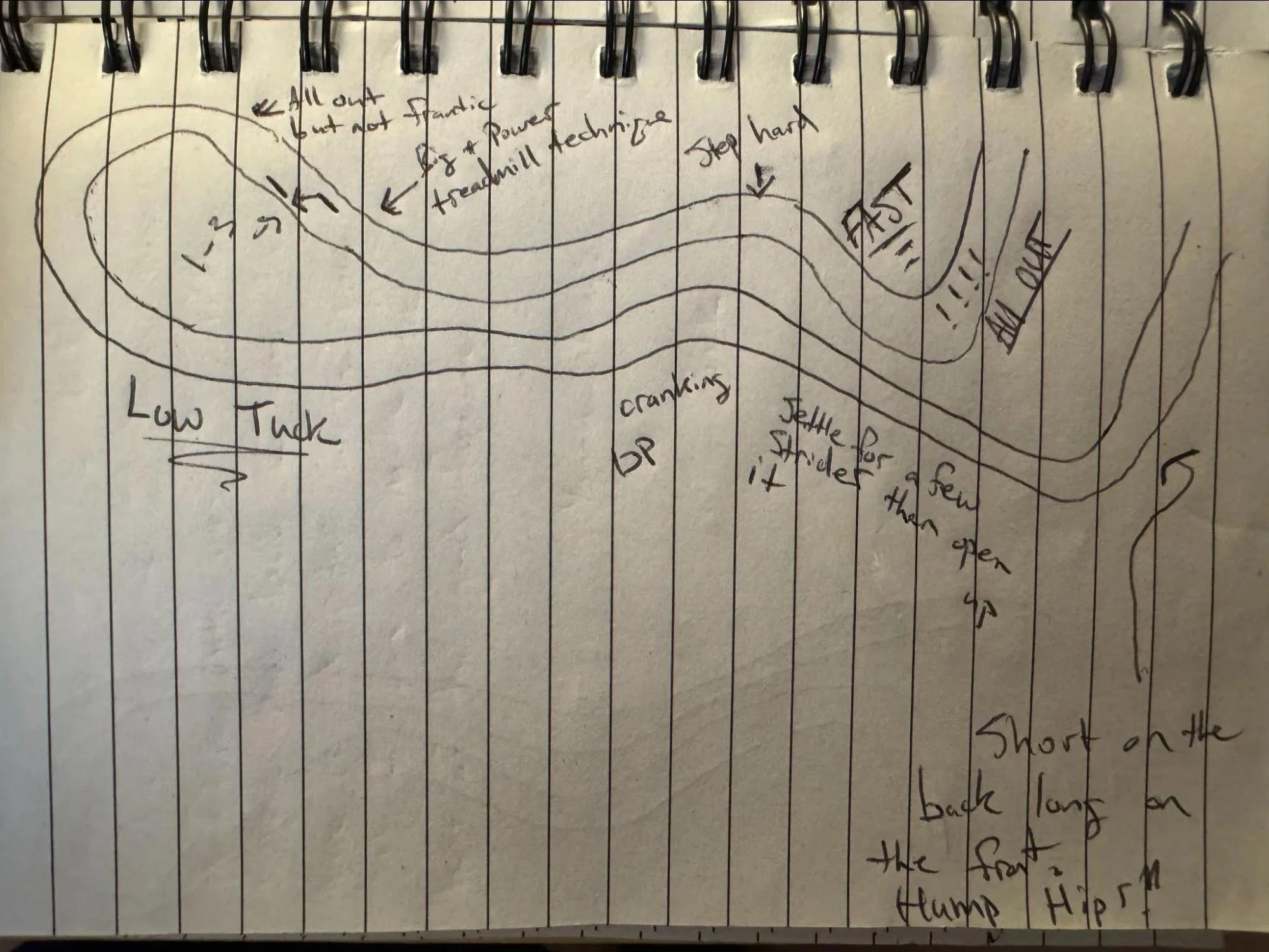
The picture I drew for Ruka.
Day Off
Because there was a distance race on Friday, I did my race prep workout two days before the race. I prefer to do it the day before, but I’m not all that picky. This way I feel a bit more comfortable with pushing harder during the race prep knowing that I have an extra 24 hours before I have to toe the line. This Friday, I took a short jog, watched the races, and drew a little picture of the course with notes on how to ski it well.
Pancake Purgatory with fellow Colby Mule Erin Bianco
Familiarity
These steps are all well and good as a race week training plan, but how do you actually apply this to achieve some level of familiarity with a course you have never raced? First of all, every bit of skiing done at race pace in the preparation days needs to actually be at race pace. For example, when I was doing those reps up the final climb, I needed to remember that my legs and arms would be far from fresh once I got to that point in the course. I needed to figure out what would work when I was tired, not while I was fresh.
Additionally, I like to figure out one way or another a way to have skied every transition and downhill on the course at race pace. Once I have done this, I find that I am much more confident and relaxed in my ability to execute a strategy on race day. I’ve also found that this helps with any irrational fear of falling in tricky sections.
Of course, it is often that skiers only get one day to inspect the course or maybe only the morning of the race. In these cases, I find what's most effective is to pick 3 or 4 key sections that you want to really nail in a qualifier and devote most of your mental energy to those sections. Rely on your training and ability to think on your feet to ski the rest of the course fast, but if you can identify places where you think the race will be won and lost and execute those places, a great qualifier on an unfamiliar course becomes much more achievable.
These are the tips and tricks that I have figured out that work for me. Other athletes’ approaches differ substantially, but I think everyone is trying for the same thing: to be confident of the task at hand once your toe is actually on the line. Figuring out how to get yourself into this mental state may take some guessing and checking, but if you can get yourself to truly believe in the strategy you have planned out on a course you have convinced yourself that you know well then you are much more likely to succeed.
Northern lights in Ruka