
Tech Tip: Making the Most of the Indoor Months
by COC sculling camp coach Katherine Erickson
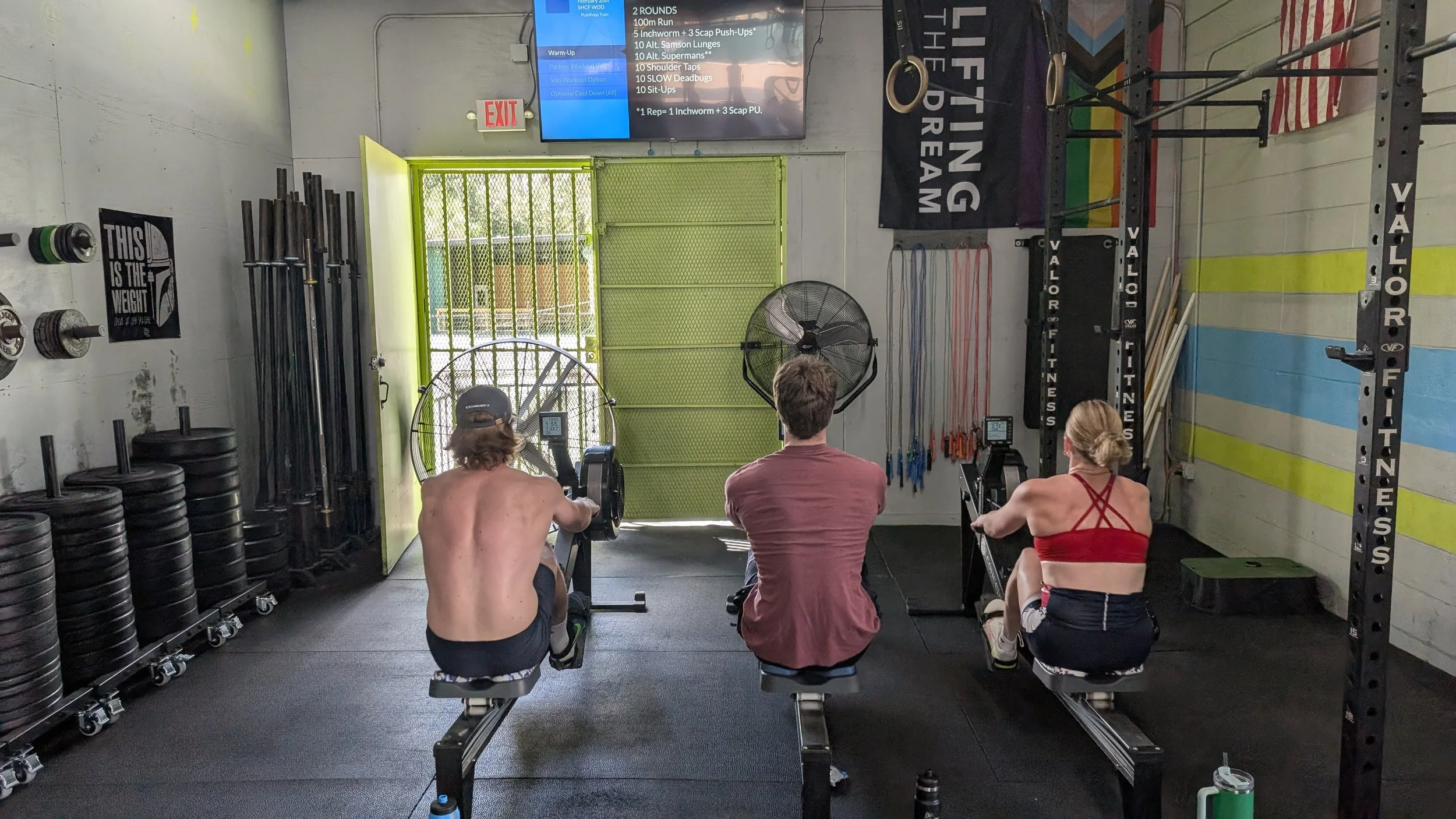
The winter solstice approaches, which means that for many of us the time has come to hang up our oars for the season and move to indoor training until springtime. Even for those lucky enough to scull year-round, the holiday season is a great time to think about building a physical baseline that will carry into the 2026 season and beyond.
These dark months can sometimes be the most dreaded of the year - unpleasant memories of boredom, isolation, and too many hours spent away from the speed and thrill of being on the water. Winter training need not be lost time, however, and making effective use of this period can pay huge dividends in the spring and summer. As they say, “Winter miles make summer smiles.” To make the most of my winter training, I keep the following three principles in mind:
Erg with water speed in mind
The ergometer is a fantastic training tool that for many rowers forms the backbone of the winter season. It does so many things well: it is highly adjustable and adaptable to different body types and fitness levels, allows for fairly sophisticated workout programming and data collection, and provides consistent quantitative feedback on your current fitness. A coach I work with refers to it as the ‘standardized test’ of the rowing world, akin to the SAT - it provides data about your performance that is comparable both to yourself over time (think of taking the SAT several times to try to improve your score) and to others in your peer group.
What the ergometer is not, however, is a faithful facsimile of all of the technical skills required to translate physical strength into speed on the water. The Concept2 rower’s wide rail and central drive chain mean that the combination of balance and body position required to be a sympathetic and effective rower can be lost without conscious effort on your part to maintain them. To use the erg effectively with water speed in mind:
Think about your feet - establish connection through the foot stretcher through all phases of the stroke. A good check in is to occasionally row with the straps fully loosened to make sure you are not relying on them to stay attached to the machine. If you find yourself coming off the foot stretcher, practice staying engaged through the trunk and not trying to get ‘length’ by leaning back too far. You can also look at the width of your feet off the rails to check that you are pushing equally on both legs (a good visual check that is hard to do in the boat!).
Use a mirror - with a mirror placed front on, you can check for bilateral symmetry - look to see if your shoulders are level at the catch and through the drive of each stroke. Both scullers and sweep rowers develop slight asymmetries in their shoulders over time on the water, so this is a fantastic opportunity to return to center. With the mirror placed at an angle or to the side, you can check in on your stroke mechanics with an eye to keep working on the technical skills you developed on the water this year.
Hold the handle like you would hold an oar - maintain the same grip that you would on the water, with wrists flat and your hold on the handle relaxed but secure. Avoid the temptation to practice ‘relaxation’ by opening your hand or holding the handle way out at the tip of your fingers - remember the type of connected grip you would want to have on a bar in the gym as a guide. Additionally, while you don’t need to tap down on the erg, you can still benefit from thinking about your catch and finish position, staying supported and level.
Make effective goals for the season ahead
One of my favorite parts of this time of year is beginning to make plans and dreams for what the next season might accomplish. I use a SWOT analysis to begin my goal-setting process, identifying current Strengths, current Weaknesses, future Opportunities, and future Threats. This process helps to ground me in my current abilities, allows me to compare year-on-year as I (hopefully) shift some former weaknesses into strengths, and encourages me to think creatively about ways to maximize my success. Once I have completed my SWOT, I like to focus on Weaknesses and Opportunities, as these will form a key part in my off-season planning. I try to set a few smaller, concrete goals to help address my most pressing weaknesses, and work backwards from a future opportunity to line myself up for a competition or goal that I think I can achieve in the year to come.
Cross-Train to strengthen your weaknesses
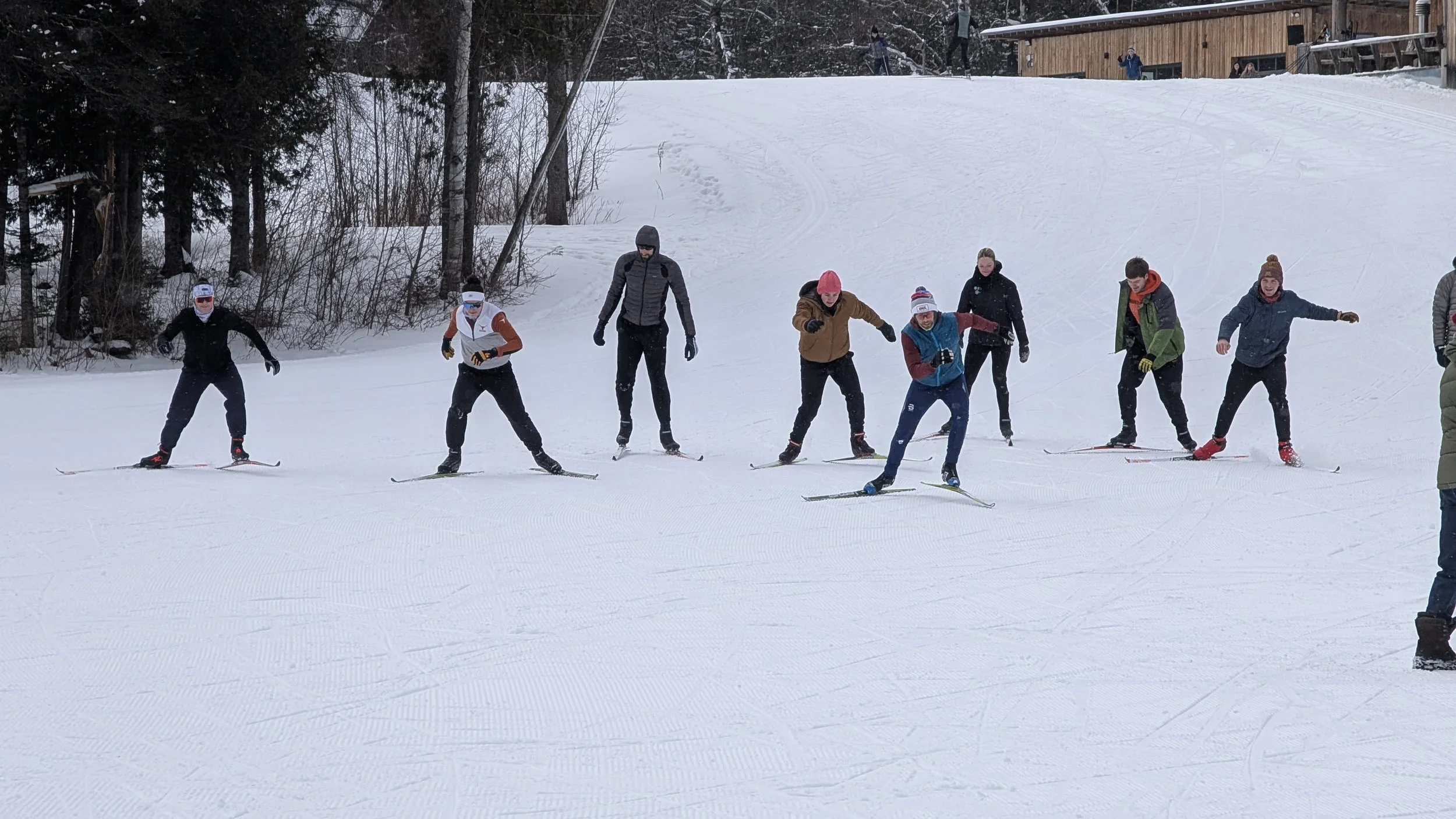
The GRP Rowers often hit the ski trails in the winter to cross-train
This time of year often represents the longest period in a rower’s calendar before their next major competition, making it a perfect time to explore other athletic disciplines that can help build overall physical well-being and robustness. If you completed a SWOT analysis as above, you probably identified a few areas for future improvement in your journey as an athlete. For me, upper body strength (including scapular stability) and flexibility have been on that list many times. Trying out different indoor-friendly activities in the winter like rock climbing, gymnastics, and Pilates break up the monotony of the erg studio and build strength in the areas I need without feeling like a chore. Your areas of weakness might be different and so your potential activities will be different, too - the key is to find something fun that helps you nudge that weakness into the ‘Strength’ column of your SWOT analysis before the next season starts.