
The Quiet Power of Cadence
by GRP runner Jess Scheriff
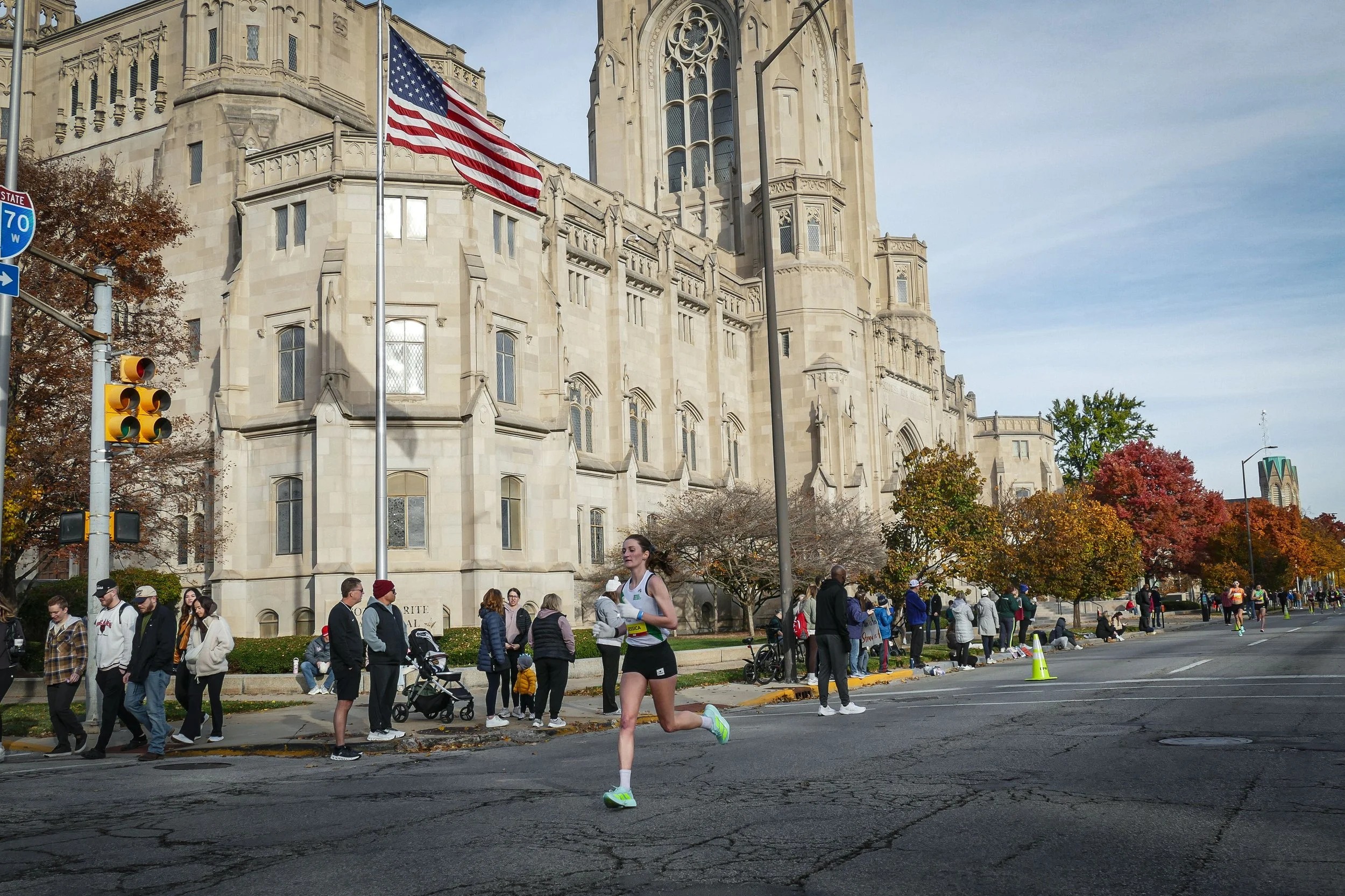
Every runner has their comfort-zone metrics: pace, heart rate, weekly mileage. But one important, yet commonly overlooked stat is cadence: the number of steps you take per minute.
For years, cadence wasn’t something I thought much about. I’d been told mine was naturally solid, so I never felt the need to adjust it. But during my recent build for the Indy Monumental Half Marathon, I started to feel some stubborn knee discomfort, nothing major, just enough to disrupt my rhythm and make me wonder what was going on beneath the surface.
Around that same time, a conversation with a close friend completely reframed how I thought about efficiency and stride mechanics.
He’s a physical therapist and a strong, seasoned runner, but he’d been trapped in a cycle of lower-leg issues that kept resurfacing. One day on an easy run together, I heard the faint beeping of a metronome coming from his watch. When I asked about it, he admitted:
“I’ve been thinking a lot about my injury cycle, and I think I finally figured out the real problem; my cadence is too low.”
He explained that he’d been subtly overstriding for years without thinking much about it. By increasing his cadence just a few steps per minute, everything changed. His stride shortened slightly, he began landing more underneath his center of mass, and the persistent lower-leg stress he’d been fighting finally started to resolve.
Listening to him break down the mechanics made something click. It made me curious about how cadence might be influencing my own lower-leg issues, and what role stride rhythm truly plays in overall running efficiency.
Why Cadence Matters for Biomechanics
Cadence or stride rate is how many steps per minute (SPM) you take while running. The ideal cadence number is going to vary from runner to runner, especially when factoring in running style and body mechanics. Although you will usually see 170-180 steps per minute as a recommendation, it is important to find a cadence that feels natural to your body. Cadence isn’t about chasing a certain number; it’s about understanding how your body meets the road. Here’s why it matters:
1. Cadence influences where your foot lands: A lower cadence often leads to overstriding. Landing with the foot too far in front of the hips. That creates a braking force with every step and sends excess stress up the shins and knees. A slightly higher cadence helps you land more underneath your body, improving efficiency and reducing impact.
2. It determines ground contact time: Quicker turnover usually means lighter, smoother steps.
Spending less time on the ground reduces the load on the lower legs and helps maintain forward momentum.
3. It can improve joint alignment: When cadence is comfortable and natural, the body tends to stack itself well: hips over knees, knees over ankles, torso tall and stable. Better alignment = fewer places for force to get “stuck” and cause irritation.
4. It protects form when fatigue hits: Late in long runs, cadence becomes one of the easiest tools to control. When everything else starts to fade, dialing into a steady rhythm can help keep your form intact and prevent heavy, collapsing steps.
Cadence Isn’t One-Size-Fits-All
There is no magic number every runner should hit. Height, leg length, pace, running experience, and individual mechanics all play a role. The key is awareness, not perfection.
For many runners, even a small adjustment - often just a 3–7% increase - can make a noticeable difference in smoothness and lower-leg comfort (source 1,2). For others, simply maintaining their natural cadence works best, as long as it supports efficient mechanics.
The goal isn’t to force a new stride. It’s to refine the one that already works for you.
How to Tune into your Natural Rhythm and Build Smooth, Efficient Cadence
There are a few easy, effective ways to work on both tuning into your natural cadence and improving it over time. One of the best is adding strides at the end of your run. Short 20–30 second accelerations naturally encourage quicker, lighter steps without forcing anything unnatural. Focus on staying relaxed, taking short, fast strides, and feeling your feet land quietly underneath you. Over time, strides help reinforce a smoother, more efficient turnover.
Another helpful approach is running with a metronome or music that matches a target number of beats per minute. Let the rhythm guide your steps and help you maintain a steady cadence. You don’t need to make a big jump, just gradually nudge the BPM upward as it begins to feel more natural. This is a simple way to build awareness of your stride rate and gently train your body toward a quicker, more efficient rhythm. Generate a playlist with the BPMs/SPMs you want to achieve and boom, you have yourself a fun little fartlek workout!
You can also take advantage of the metronome feature on many smart watches - my Coros Pace has it. Setting it for short sections of an easy run is a great way to feel what a slightly higher cadence is supposed to feel like. It provides instant feedback and helps connect the sensation of efficient turnover with your natural stride.
What You Might Feel After a Few Weeks
lighter, smoother steps
less lower-leg tightness
improved form late in runs
faster turnover without extra effort
fewer “slapping” footfalls
more control over your stride
Cadence might be quiet in the background of your runs, but it has a powerful influence on how efficiently and comfortably you move.
Next time you head out for an easy run, take a moment to notice your rhythm. Count your steps, feel your stride, and play with slight changes. You might discover that a tiny adjustment leads to a smoother, more resilient stride and a healthier relationship with your running.