Tech Tip: Elevate Your Erging
by GRP Row coach S. Hap Whelpley
While not all of us are headed indoors, the rowers of the GRP certainly are at this time of year. At least they are headed indoors in order to meet their sport specific needs. This means "erg season," and what that means to different people is important to unpack. For many, it means grittiness, delayed gratification, tough focus or solitude, a need for playlists, and resilience. As a coach, I see it as an obvious time to build fitness, but a dangerous time to maintain or improve on-water technique. To me, the issue is not the machine. The machine, regardless of the one you are using, is similar to rowing. Not identical, but similar. Each machine has a slightly different feel and possibly mechanics (if requested, I could go through these nuances at another date or in another medium). The main issue is how we engage with the erg. Due to its increased consistency and minimally variable sensory feedback, it is easy to "grind" out erg season. This tough but technically disengaged mindset might not hold back your fitness, but it certainly will not do any justice for your technique and understanding of the sport.
As already established, the erg is not the water. That's easy to see, say, and pontificate about. Nonetheless, one could also see upsides like: sport-specific physiological training, mental focus through a more consistent and closed system, and a simpler platform for technical changes. Imagine yourself as an artist, working to master your craft. If you were a classical guitarist and were handed an electric guitar to play, would you not try to play it to the best of your abilities? If you painted with oil colors and all you had were watercolors, would you not try to paint as beautifully as you could with that different medium?
To ground this in something more practical now, I'm advocating for using the ergometer as a technical tool rather than a hamster wheel. You have to remain curious and inquisitive about your stroke. You have to remain driven about your quest to find the most efficient and effective stroke you can. This requires engagement and drilling.
Engagement
As per your engagement, consider what you try to feel in the boat. When in a boat, we should be constantly gauging the speed of the boat at all times in the stroke. When you pick the stroke up, you want to do it with some cognizance or understanding of how fast the boat is already moving. When accelerating the boat through the drive, we want to know how our efforts propel the boat and exactly how much we can encourage it onward. When we release the boat, we want to understand the fruit of our efforts. The same can be applied to the ergometer. The boatspeed that you're trying to understand is the fan speed. How is it moving when you pick it up? How is it moving in the mid drive? How is it moving when you round the back turn? The feel and auditory feedback can be quite illuminating and interesting.
Drilling
With regards to drilling, almost any drill you can do on the water can be done on the erg with the exception of blade work. I would advocate for a dynamic system like a Concept2 on sliders, a Concept2 dynamic erg or the like. These would allow for a different sense of motion that is more akin to the movement of the boat. At any rate though, you can use drills to refine your movement on the erg, and frankly, it may offer an even higher level of refinement as no wind or weather interrupts your focus and efforts. In both cases of drilling on and engaging with the ergometer, you need to elevate your attention to detail in order to keep evolving your stroke.
At Craftsbury, we benefit from a score of different machines. Having athletes move around dynamics, sliders, and static ergs can really help to increase their engagement with the motion. The change of feel and mechanics between different systems with a similar motion helps to draw out new sensations and observations about their movements. While this might not be possible for everyone, there are things you can do to "spice up" your erg sessions. Here's a list of different tools I have tried over the years on the erg with the last one explained and highlighted:
rowing feet out with sheets of paper under your toes to improve connection
tying light bungees around the handle and the cage to encourage greater drive acceleration through accommodated resistance
using different objects to change the rigging or feel of the seat like a balance disc to improve core engagement
taping nuts and bolts to the back edge of the seat to discourage slouching
attaching reach sticks under the monitors on dynamic ergs so athletes can see how soon their hands get prepared and how long they hang there at the front end
placing colored tape at even increments on the base slider rail so that athletes could see how far they send the machine each stroke
erging with foam under the handles to feel the application of power in a new way
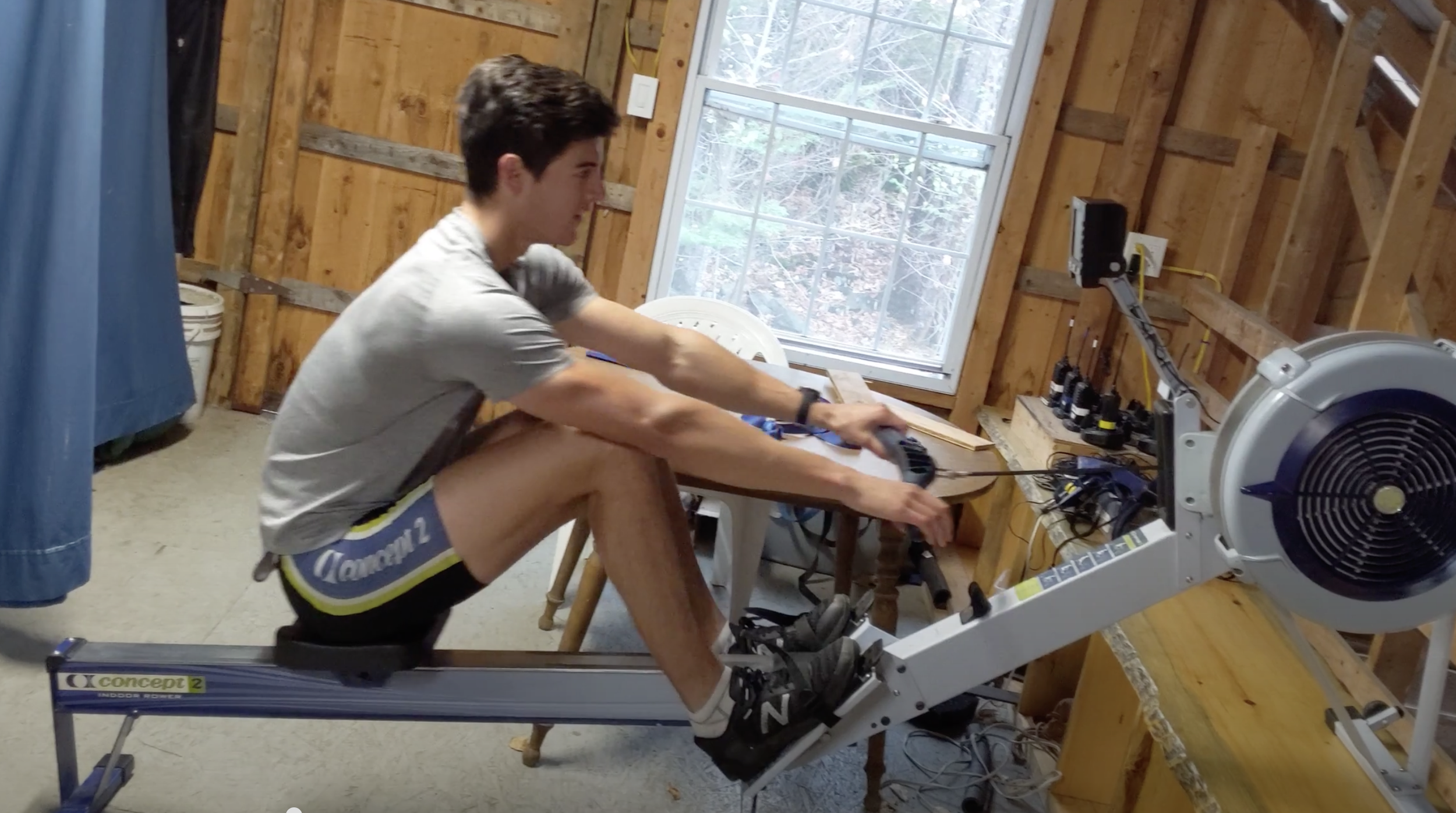
elevating the front foot of a static erg
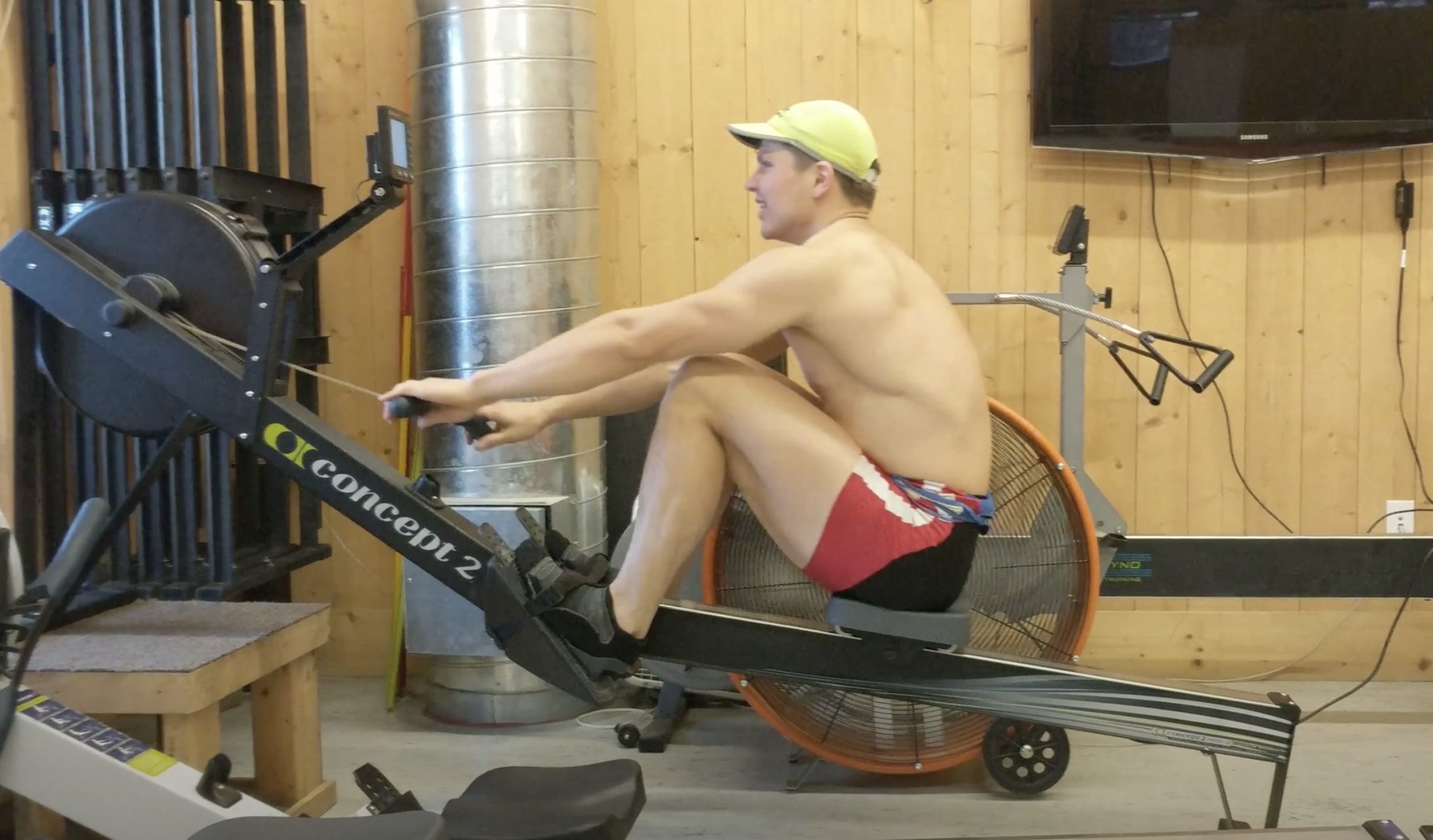
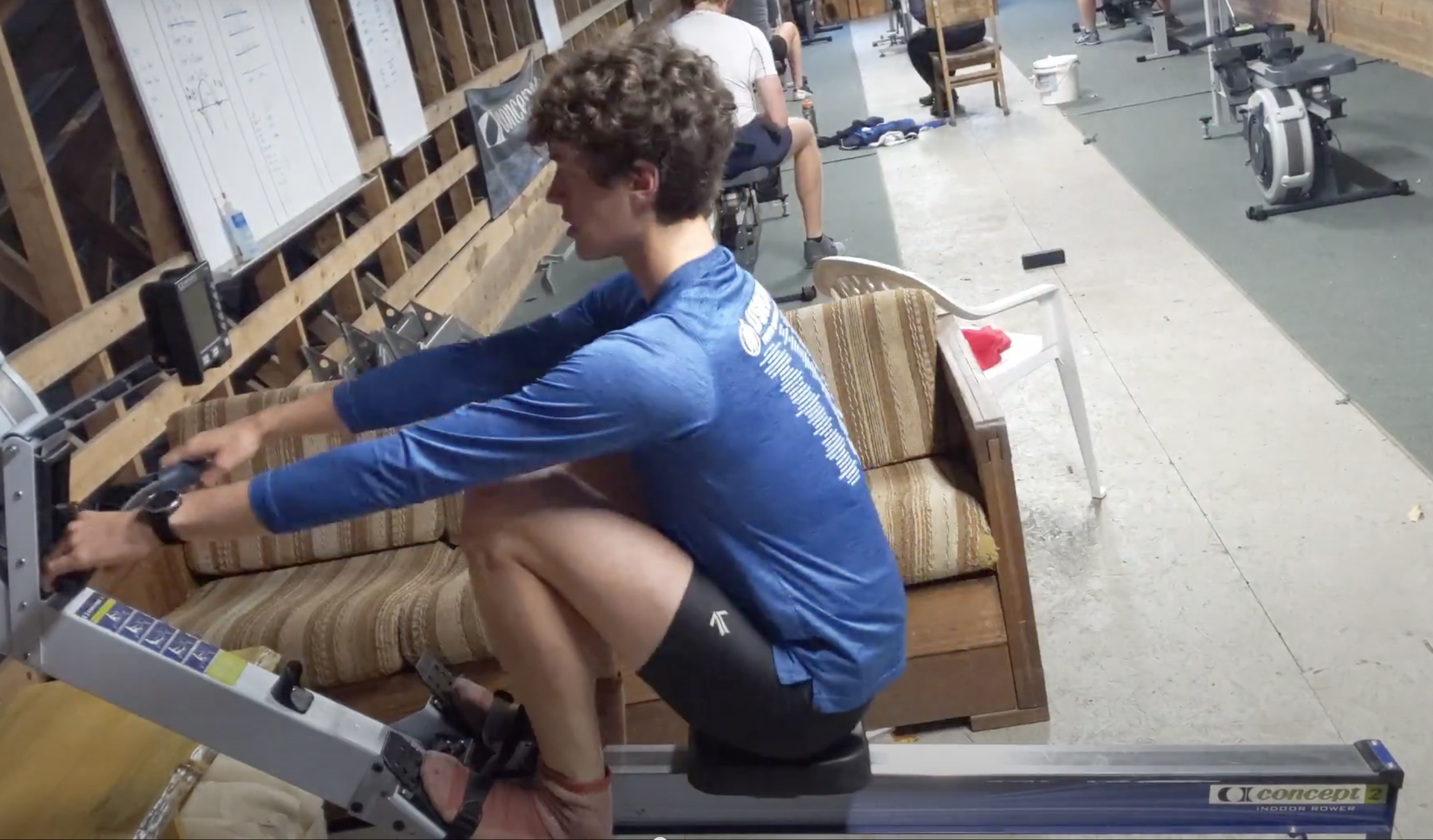
Dan Roock was the first coach to show me what would happen if you "erged uphill." All you have to do is find a stable object that is wide enough for the front feet of the erg to fit on. Put that object up against a wall, and then put the front of your erg on that object. While this drill does several things, it most importantly encourages body prep before coming up the slide. If your shoulders are behind your hips and the front of the erg is raised, it will prove nearly impossible to drag yourself up the rail. If you get your shoulders forward, voila! You're still getting up to the front end. Additionally, it also works to make rowers more aware and conscious of their hamstrings on a recovery. While you don't want undue tension when rowing, it's still often an important muscle group for rowers to better understand. Also, hamstrings generally need more development in all of us. Lastly, it also will help teach a dynamic drive with good connection as you cascade downhill.
I think it is worth initially trying it for a short intentional period with a significant change in elevation. Try putting the front of your erg relatively high to feel the exaggerated change. Then, once you've felt that, entertain erging for an extended period of time with a slight rise to the front of your erg.