
Tech Tip: Gearing up for rowing in the cold
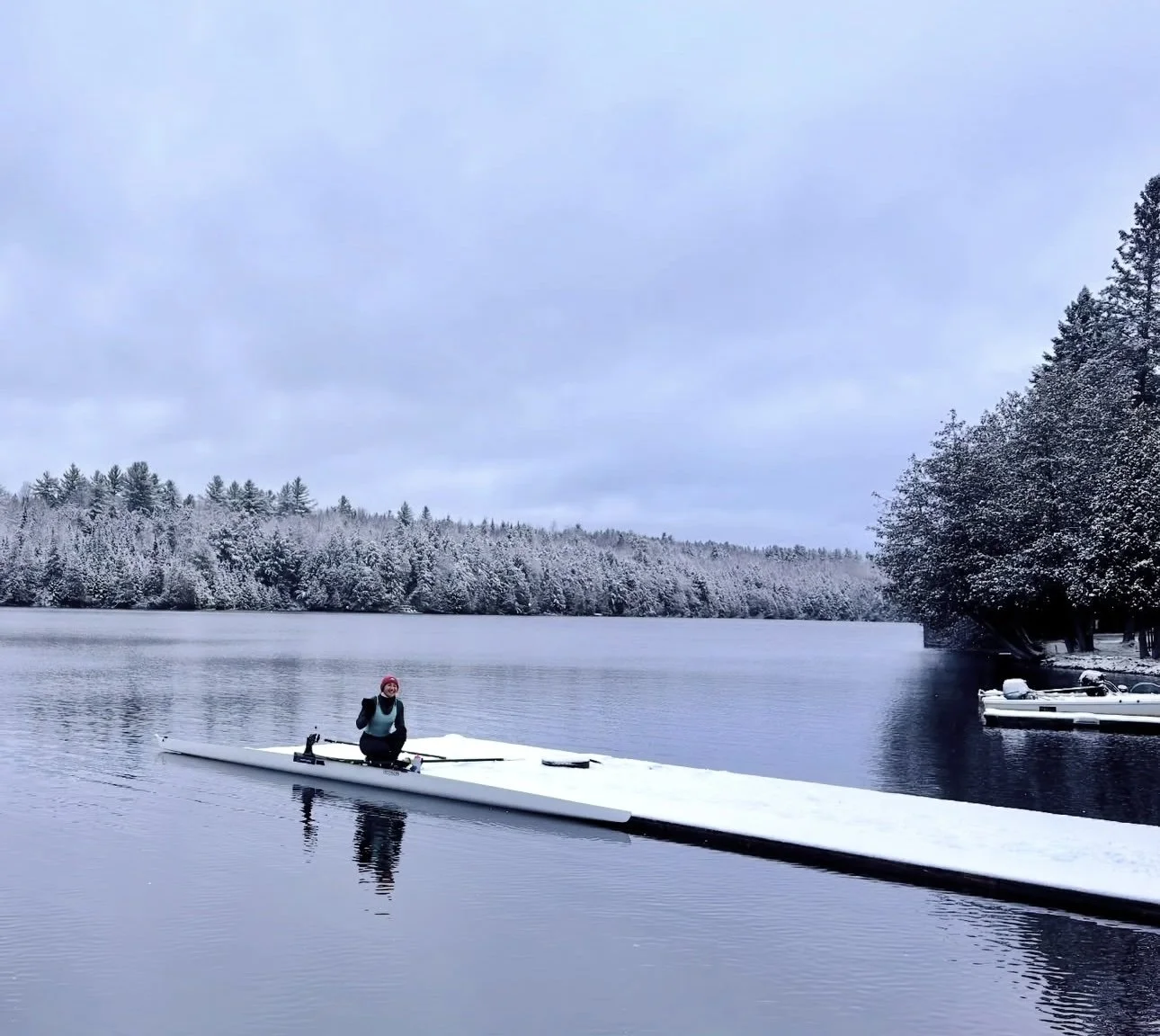
While we’re not there yet, winter is coming for us all. Photo: Grace Donabedian, 2025 fall.
by GRP rower Grace Donabedian
Rowing in the cold doesn't have to be uncomfortable! Making sure that you're prepared for the weather before the work starts is key to executing a solid training session while minimizing the risk of injury. The Green Racing Project is working towards the USRowing Small Boat National Championships, so our training is still in full swing. Here are some tips that I'm implementing this season to ensure that my training sessions are just as effective, no matter the weather:
Prolong your land warmup. For me, this looks like adding an extra 3-5 minutes on the erg or bike erg before starting my dynamic warmup. This step ensures that your core temperature rises before you start stretching.
Dress warmer than expected. I like to anticipate the weather being 5-10°F colder than my weather app says to ensure that I'm prepared for the worst. Especially when you're on the water, wind chill can be a big factor. My favorite layers are vests, ear warmers and fleece-lined leggings. Remember, you can always de-layer throughout the session!
Target your layering in areas that are more injury prone. Dressing warmer for injury-prone areas during training maintains blood flow, increases joint lubrication, and prevents cold muscles from contracting or tensing up. When targeted tissue or joints drop in temperature, they lose flexibility, making them highly susceptible to micro-tears during sudden movements. Reduce your risk of injury by localizing your layers. For rowers, this might look like prioritizing the core and ribs area with a vest. I also wear a compression layer on my forearms because they tend to tense up in the colder weather.
Wear gloves for as long as you can before launching. My hands are always the first extremity to get cold. Wear gloves while bringing your oars and boat down to the water to delay the chill and then leave them on the dock. If you struggle with circulation, consider wearing pogies for the beginning of your row as well.
Prolong your water warmup as well. By the time you launch, time has passed from your land warmup and you need to activate those muscles again (this time, outdoors). I like to run through my usual drills (pick drill and square blade rowing) before jumping into my steady state pace. If it's a really cold day, instead of UT2 pace (approximately zone 1 of a 5-zone model) I might start with 2-3 minutes of UT1 pace (zone 2-3 of 5) to speed up the process of getting warm. Remember, it will take longer for your heart rate to get into zone in colder temps.
Stay hydrated. Even if it doesn't feel like you're sweating as much, remember to stay hydrated. Not only will this help your training session, but it will aid the recovery process afterwards.
Finally, always pay attention to your club's rules regarding cold weather rowing. If you're feeling unsure or nervous about the temperature, this could be a great time to opt for a team boat instead of the 1x. Follow your club's safety guidelines and remember that no workout is worth compromising your safety.
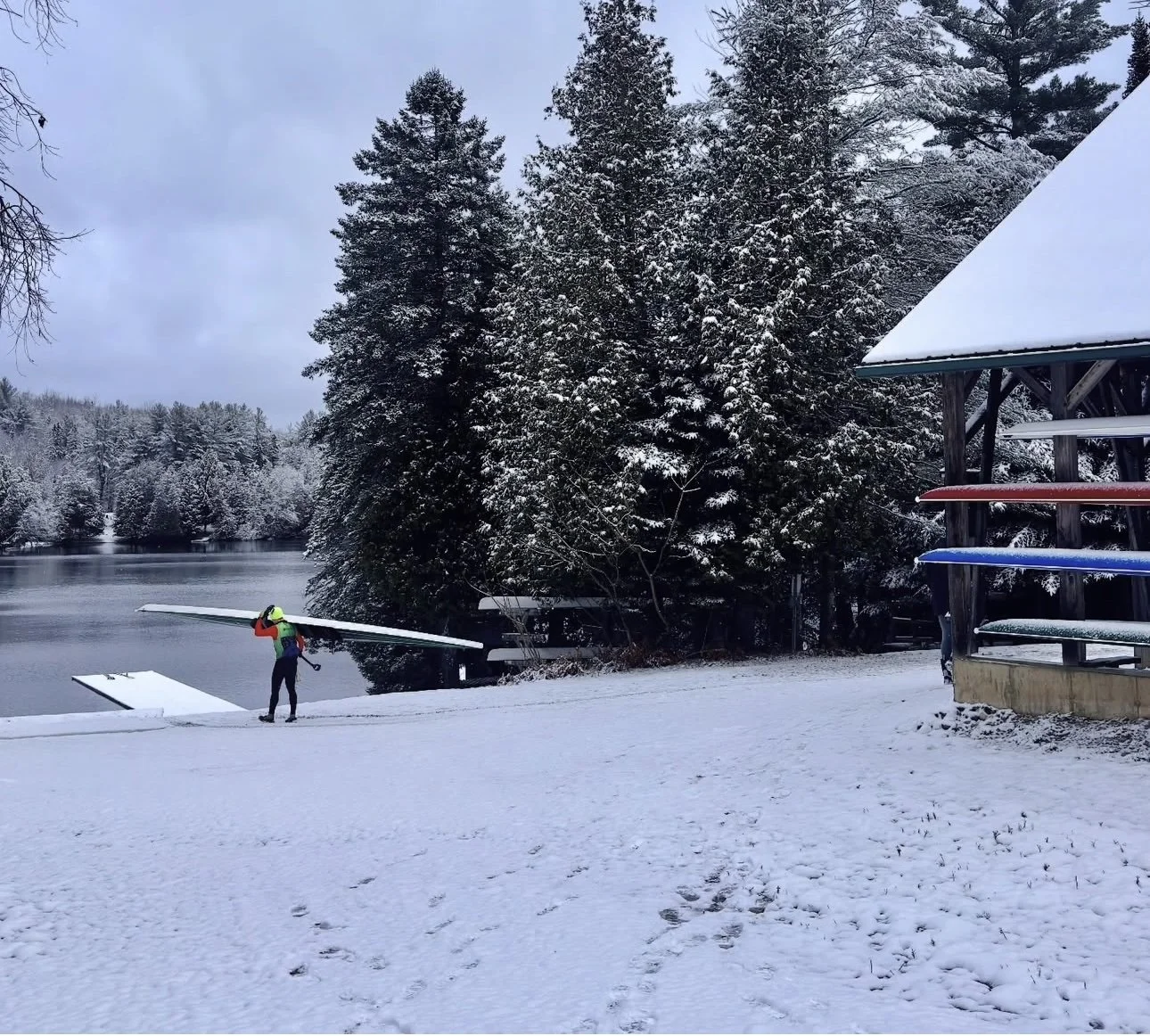
Photo: Grace Donabedian, 2025 fall.