
Tech Tip: Rowing With a Headwind
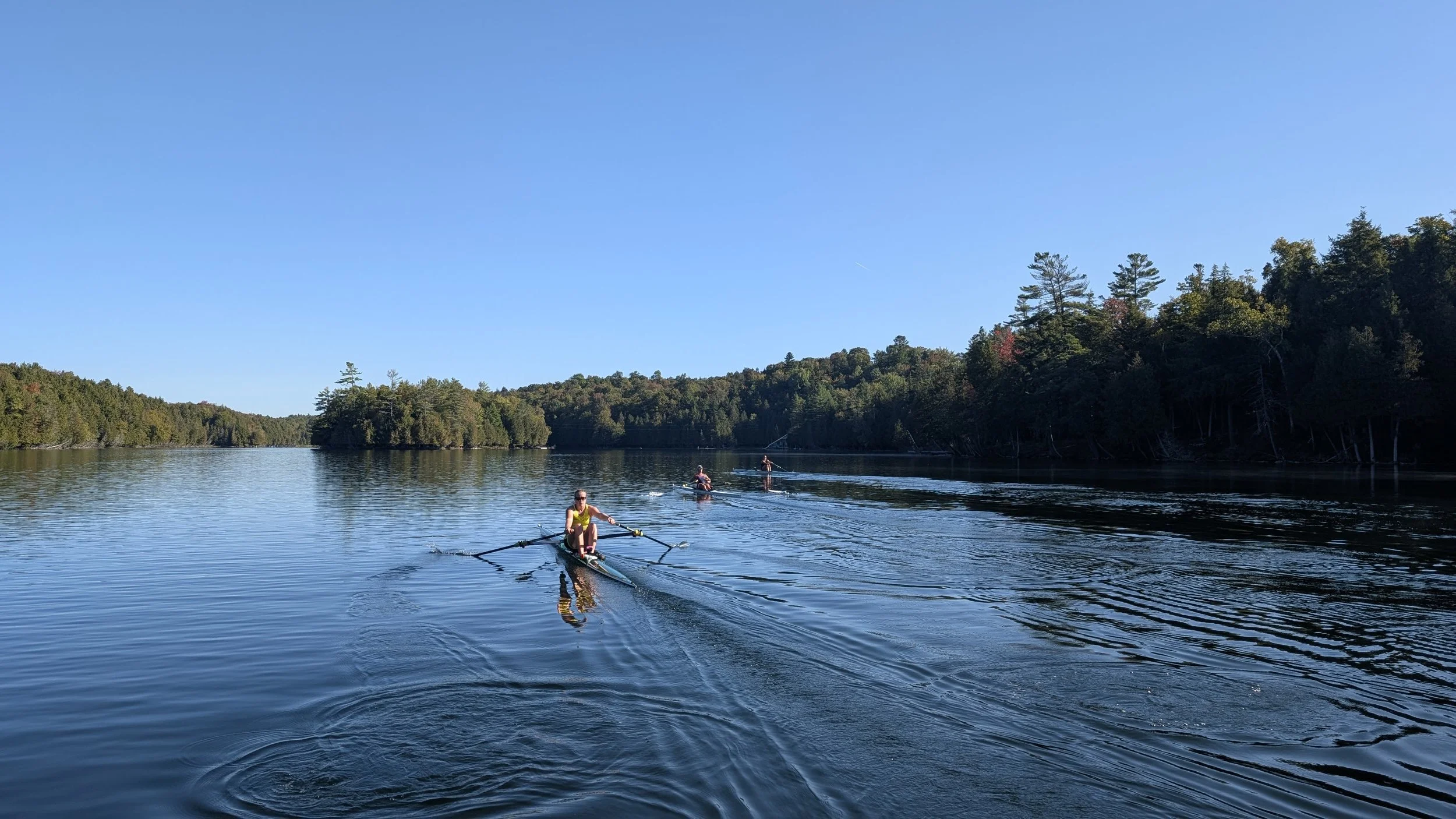
We've had plenty of windy days on the Hos this summer in Craftsbury. Since we row on a 2.8k stretch of water, we usually change direction several times during a practice, giving us multiple opportunities to experience both headwinds and tailwinds in a session. Everyone has their preference. Some rowers love a headwind because they can really feel the blade connect with the water, even though the stroke feels heavier. Others prefer a tailwind, where the reduced resistance allows for a quicker, lighter-feeling leg drive.
The reality, though, is that racing conditions aren't something we get to choose. Learning to row well in any conditions is part of becoming a more adaptable and effective rower.
Lately, one of my personal focuses has been improving my technique in a headwind - specifically, finding better connection when the stroke feels heavier.
When I row into a headwind, I tend to make two common mistakes that leave the boat feeling slow and unnecessarily heavy:
I drop the blade into the water and immediately drive hard with my legs instead of allowing the pressure to build through a smooth acceleration.
I pick up the initial load with my upper body instead of engaging my hips and glutes.
The first mistake costs boat speed because I'm impatient at the catch. Rather than allowing the blade to connect cleanly before applying power, I rush into the drive. The second makes every stroke feel much heavier because I'm asking relatively small upper-body muscles to do work that should be initiated by the larger, more powerful muscles.
Here are two drills that have been especially helpful in teaching me to work smarter - not harder - in a headwind.
Reverse Ratio
This drill exaggerates patience at the catch while reinforcing smooth acceleration:
Move up the recovery quickly.
Drop the blades into the water with minimal effort.
Simply change directions and let the boat glide through the drive with almost no pressure.
Notice how the blade has time to become fully connected before you ask it to do any work. Resist the urge to rush the drive.
Once you've established a rhythm, gradually build pressure over the next 10 strokes. Focus on accelerating smoothly throughout the drive while maintaining the same patient blade placement at the catch. The goal is to reinforce that connection happens first, then acceleration. Trying to pick up all the load at once only makes the stroke feel heavy.
Top Quarter
This drill teaches you to engage your hips and glutes during the first few inches of the drive:
Sit at the catch with the blades squared and buried.
Engage your glutes and hips to push through the top quarter of the slide while keeping your shoulders relaxed and down.
Return to the catch, drop the blades in and repeat.
Because the movement is so short, speed isn't the objective. Instead, pay attention to where you're initiating the drive. The first movement should come from your hips and legs - not from shrugging or pulling with your shoulders. Repeat for 10 strokes, focusing on using your strongest muscles to establish connection before building power.
Headwinds have a way of exposing technical flaws that are easy to hide in calmer conditions. Rather than fighting the water harder, use those heavier strokes as feedback.
If you can stay patient at the catch, establish a clean connection with the hips and glutes, and accelerate through the drive, you'll not only row more efficiently into the wind - you'll row better in every condition.
If you want to learn more about the nuances of connection, check out this tech tip from GRP Row Coach Hap Whelpley!