
Bringing Joy to High School Running Camps
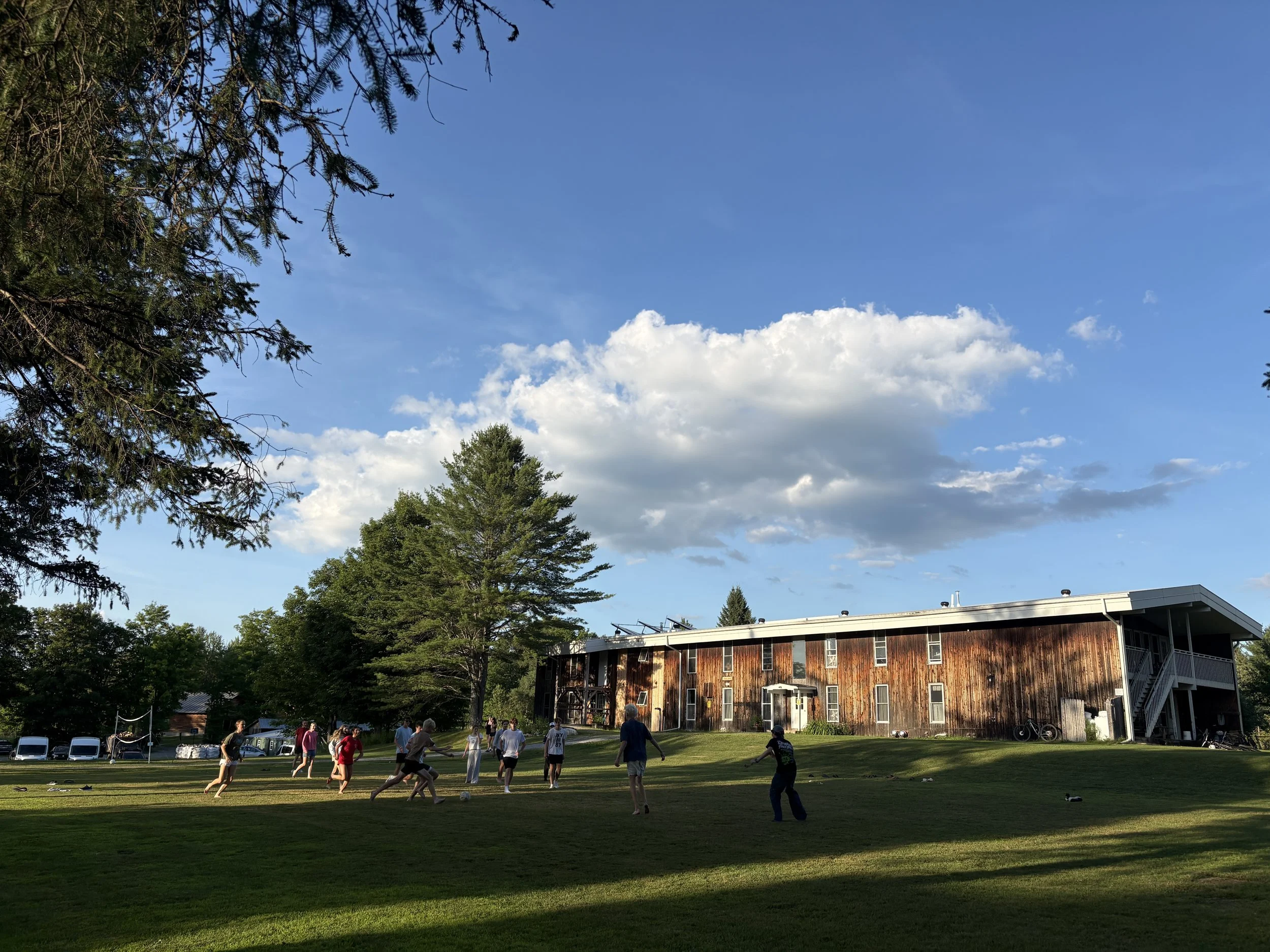
Soccer? Or shakeout run?
by COC Running Director Dakota Jones
The high schoolers filed into the Activity Center. Most of them sat at benches to see the presentation, but a few of the boys took yoga mats to sit on the floor. “That’s okay,” I told them, “as long as you don’t just fall asleep.”
“We won’t! We promise!” they said.
Lindsay Webster’s presentation was about training principles. As an accomplished trail runner, obstacle course racer, and the Green Racing Project’s new trail coach, she is a tremendous source of knowledge and experience. She explained her training philosophy by building on a series of conversations we had started with the athletes earlier in the week. We had discussed concepts like zone training, perceived effort, and the need for teenaged athletes to basically eat as much as possible. Now was the chance to put it all together in a format the athletes could take home.
Fifteen minutes into the presentation, I looked to the floor and realized that two of the boys had immediately gone to sleep. Lying on the ground while Lindsay spoke, it was disrespectful to Lindsay as well as to the other athletes who were there to learn and ask questions. As the program director, I knew it was my job to do something about this. So I steeled myself to go tell these kids, in front of their peers, that they could either wake up and be respectful or leave. I hoped that would hit the right balance between professional and devastating.
I stood up and started walking around the back of the group. As I moved, Lindsay became animated while answering a question. “Sometimes you think you need to do this much,” she said, indicating with her hand, “but then that becomes the new standard and you try to do this much.” She was getting at an important point for all athletes, and especially high schoolers: more is not always better. It’s important to have good coaches and mentors and to be able to trust them. Knowing that the majority of high schoolers who join a running camp are motivated to work hard, we tried to emphasize the importance of a balanced life and training over impressive training metrics.
But Lindsay’s gesticulating was too dramatic. As I stepped up to admonish the boys sleeping on the ground, her hand accidentally brushed a glass jar that held questions submitted over the previous day by the athletes. The jar fell off the table and exploded at the feet of the sleeping kid, who immediately levitated four feet off the ground. He came to himself in a seated position at the far end of the mat, looking around in groggy bewilderment. Lindsay tried to apologize, but I just laughed and silently thanked her. Instead of yelling at them, I grabbed the broom and cleaned up the glass, then returned to my seat. Nobody went back to sleep again.
This happened during the second camp we hosted this summer at Craftsbury. Those first two were for high school runners, and it was an unexpected joy to host so many great kids from all over the region. I am the new running program director at the Outdoor Center, and I’ve come to the job from a long background as a competitive long distance runner. I have organized trail races and running camps for adults, but the most I’ve worked with high schoolers was during a few volunteer stints with local teams in Utah. Despite a few instances like that above, they were almost universally hard-working and open to new knowledge and experiences.
There are many types of running camps that high schoolers can go to. The more well-known ones tend to prepare athletes for grueling cross-country seasons and set them up to run competitive times. They are serious camps for serious runners. Craftsbury is different. We believe that running is a tool to support your whole life, rather than the other way around. We think running should make athletes healthy and happy in their minds and bodies. We want our athletes to leave camp remembering that running is fun, and it connects them to themselves, their friends, and the places where they run. We build the foundation for lifelong sports.
But this doesn’t mean that you have to choose between being happy and competitive. We take the high schoolers on all kinds of runs that introduce them to different types of training and different surfaces to train on. We teach them about nutrition and equipment and – not always violently – training principles. But these didactic elements are mixed in with field trips, talent shows, swimming in the lake, and lots of games. Sometimes we trade a shakeout run for a game of capture the flag, and only after everyone’s finished do we inform them that they did, in fact, accomplish exactly the same training outcome as the shakeout run would have.
There is a theory to all of this, and it is simple. We think that being happy and having fun and feeling connected to your peers and the world around you makes you a better athlete. There are too many stories of athletes being consumed by toxic competitive environments that steal their love of their sports. We can’t control the rest of the world, but we can ensure that when runners come to Craftsbury they get to spend time in a place that represents what the running world should be. We’re not the only people doing this. But it would be hard to find another place where everyone, from the coaches to the dining hall to the facilities to the front office, share a vision to bring joy to everyone who crosses their threshold.
When we focus on joy, we support a person’s whole life. It’s amazing how fast people can run when they’re full of joy.
So I’ll forgive the kids who fell asleep in front of Lindsay that day. It was the middle of the afternoon late in the camp and they had been training and playing games nonstop for days. But if something like this happens again in the future, I’ll know what to do. Maybe we’ll just use a metal vase this time instead.