
Move of the Month: Power Training
by GRP rower Sophie Calabrese
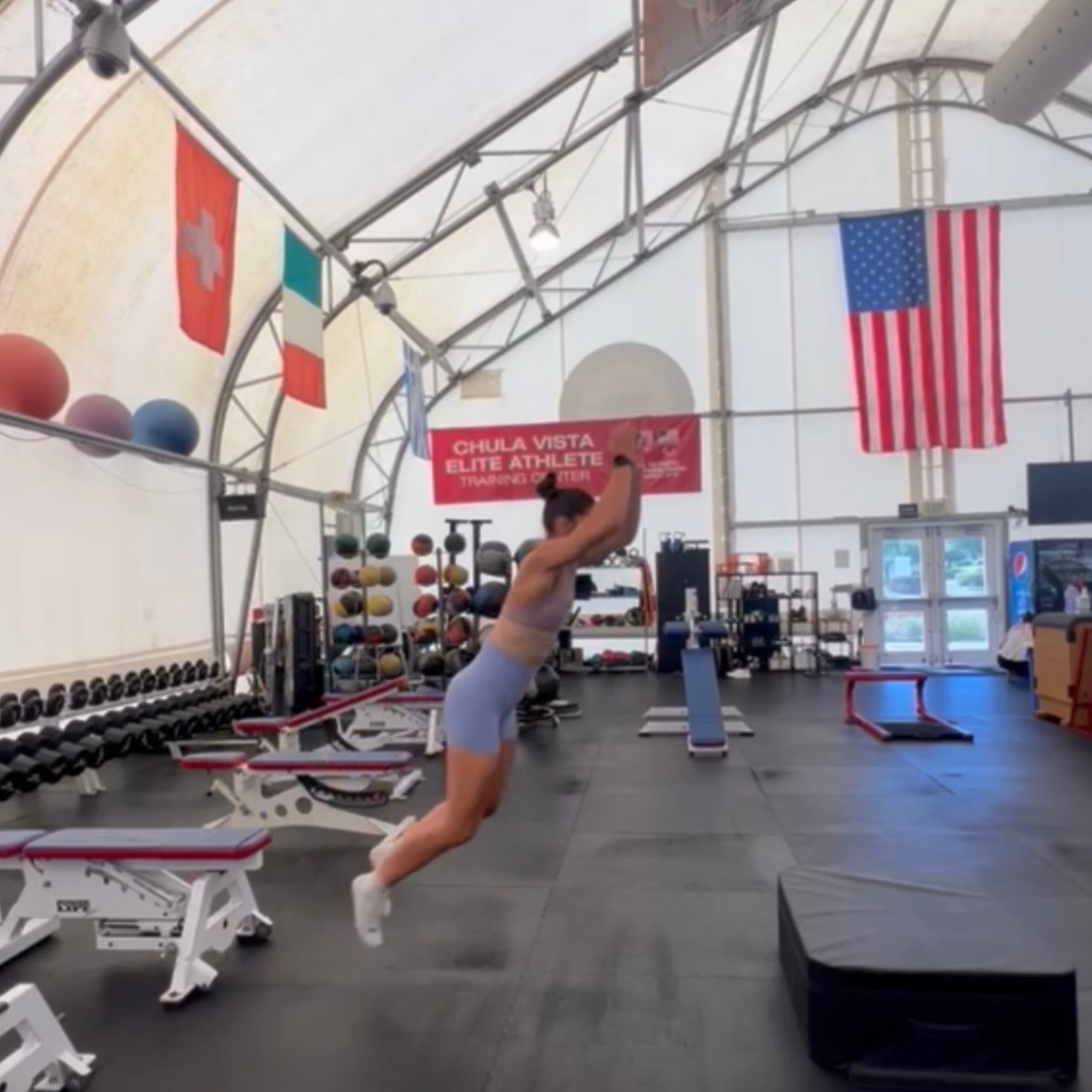
For the final edition of my series on how to construct your own strength and conditioning program, this one is all about power. Power training focuses on rate of force development or how quickly you can generate maximal force. Olympic lifts, jumps, throws, and sprints all fall into this category. The goal is not just producing force, but producing it quickly. Explosive work teaches the nervous system to fire efficiently and react fast, which is why it is essential for athletes and incredibly valuable for maintaining athleticism as we age. Even general population athletes benefit from moving explosively because power is closely tied to coordination, balance, and long-term physical resilience. The catch is that explosive training requires being energetic. Fatigue is the enemy of power output. If someone is constantly exhausted, stressed, or under-recovered, explosive work loses effectiveness and can increase injury risk. This is why power-focused phases are often shorter, strategically placed, and paired with reduced overall training volume.
A power-focused workout could include:
Box jumps: 4 sets of 3–5 reps
Med ball slams or rotational throws: 4 sets of 5 reps
Hang cleans or kettlebell swings: 4 sets of 3–6 reps
Broad jumps: 3 sets of 3 reps
Sprint intervals: 6–10 short sprints with full recovery
It’s also possible to include what’s called contrast training in a power block. This is when you pair a low rep, high load compound movement, like a back squat, with a light plyometric movement, like a body weight jump squat. Contrast training utilizes an effect called post-activation potentiation. The heavy back squat primes your nervous system to lift a heavy load so following it up with a very light, similar movement will help your muscles contract faster. To include it in a workout, try pairing 3-4 sets of 3-4 reps of a heavy compound lift with 3-4 sets of 2-3 reps of a similarly patterned plyometric movement.
Unlike hypertrophy work, power training is not about feeling exhausted. It’s about producing high-quality, high-speed movement while staying fresh enough to maintain power and technique. Because of this the sets are higher, but with fewer reps and the rest times are long, roughly 3-5 min.
Good programming often rotates through phases depending on things like proximity to the end-goal, season of life, and one’s recovery capacity. Someone might spend several months building muscle through hypertrophy work, transition into a strength-focused phase to improve force production, then shift into power training to convert that new strength into athletic movement. Each phase builds on the others.
Training should work with your body, not against it. Sometimes the best program is not the one that looks hardest on paper, but the one your body can consistently recover from while still progressing. The gym should leave you more capable, resilient, and adapted over time. Understanding the purpose behind hypertrophy, strength, and explosive programming allows you to train with intention.