
Move of the Month: Hypertrophy Training
by GRP rower Sophie Calabrese
Your training should match your current goal, your lifestyle, and even your stress levels outside the gym. Knowing when to use hypertrophy, strength, or explosive programming can completely change the results you get from your workouts. In an effort to increase education about how to structure your own strength programs, this series of blog posts can be paired with my previous one about The Big 5 body movements, except these will be all about the different kinds of training blocks you can use to your advantage to optimize your training.
The main three kinds of training phases are: hypertrophy, strength, and power. Hypertrophy training is what most people think of when they picture traditional gym training. Moderate weights, controlled reps, and enough volume to challenge the muscles. This style of training is designed to primarily build muscle size and create a foundation of muscular ability that supports strength and power training. If your goal is to add muscle, improve body composition, stay healthy, or simply feel more physically capable day to day, hypertrophy work is often the best place to spend most of your time. It’s also one of the most forgiving training styles because recovery demands are manageable compared to heavier strength work or high-output explosive training. For the general population, busy professionals, or athletes in an off-season phase, hypertrophy training often provides the best balance between results and sustainability.
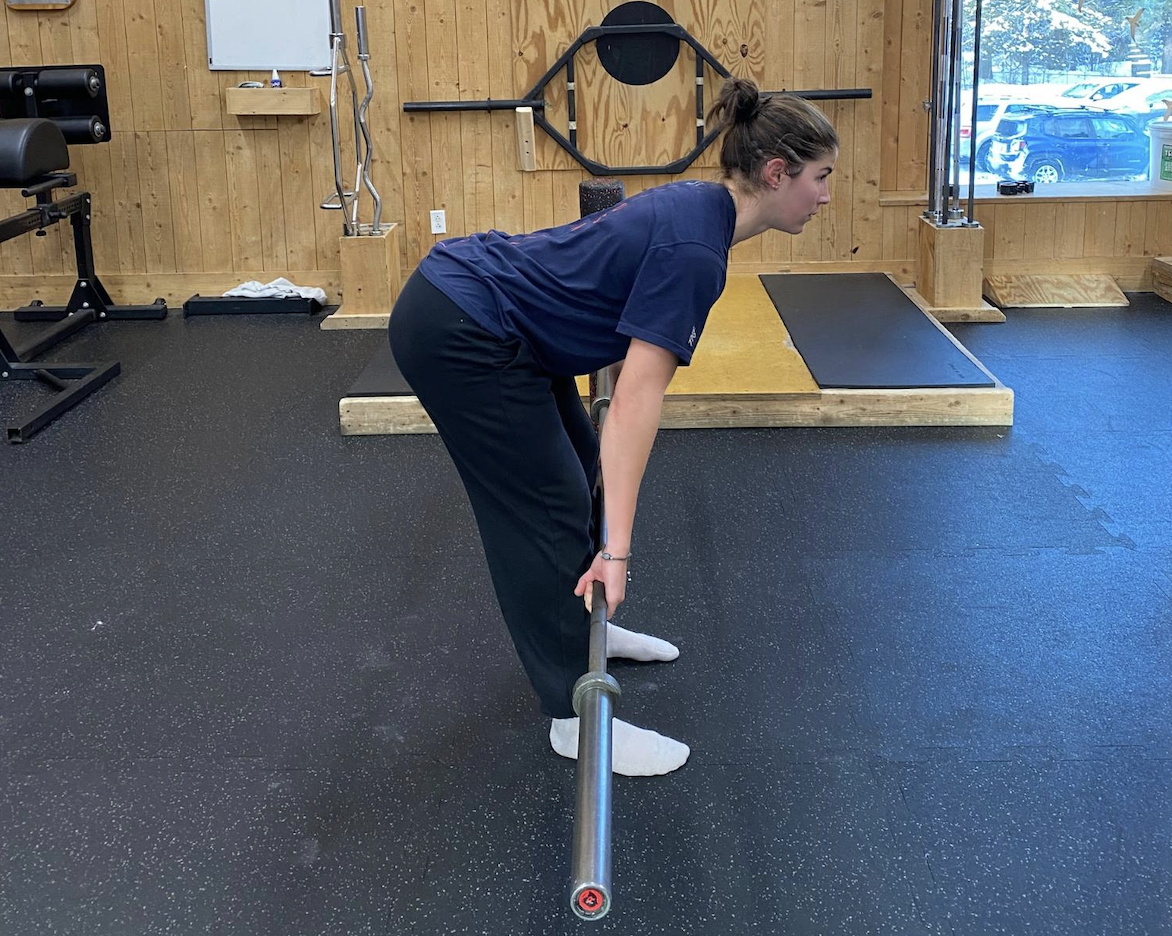
Sophie demonstrating a Romanian deadlift
A hypertrophy-focused workout might include exercises like:
Goblet squats: 3–4 sets of 8–12 reps
Dumbbell bench Press: 3–4 sets of 8–12 reps
Romanian deadlifts: 3 sets of 10 reps
Pull-ups or lat pulldowns: 3 sets of 8–12 reps
Walking lunges: 2–3 sets of 12 reps each leg
The goal here is time under tension, moderate rest periods, and accumulating enough training volume to stimulate muscle growth. As you can see, you’ll want to stick to 2-4 sets of anywhere from 8-15 or even 20 reps depending on the movement you choose. Compound movements like squats or deadlifts should have fewer reps with more sets while isolated movements like bicep curls should have higher reps with fewer sets. This is because compound exercises recruit more muscles than isolated ones. Rest between sets should be on average 2 minutes for the compound exercises and 1.5 minutes for isolated exercises.
Stay tuned for the next two blog posts on strength and power blocks!