
Perspectives From a Race Director
by GRP runner Kasie Enman
Every year as the calendar approaches May, I put on my race director’s hat. Along with my co-race director, we reach out to community partners, apply for sanctioning, set up registration, troubleshoot problems, hire a first responder, reserve the port-o-lets, maintain the website and socials, recruit volunteers, order supplies, so many spreadsheets, solicit donations for prizes, create maps, communicate with registrants, manage the budget, brainstorm improvements, do countless rounds of the course: leaf blow, clear, repair, place signs. My mind and time is consumed with details of race logistics.
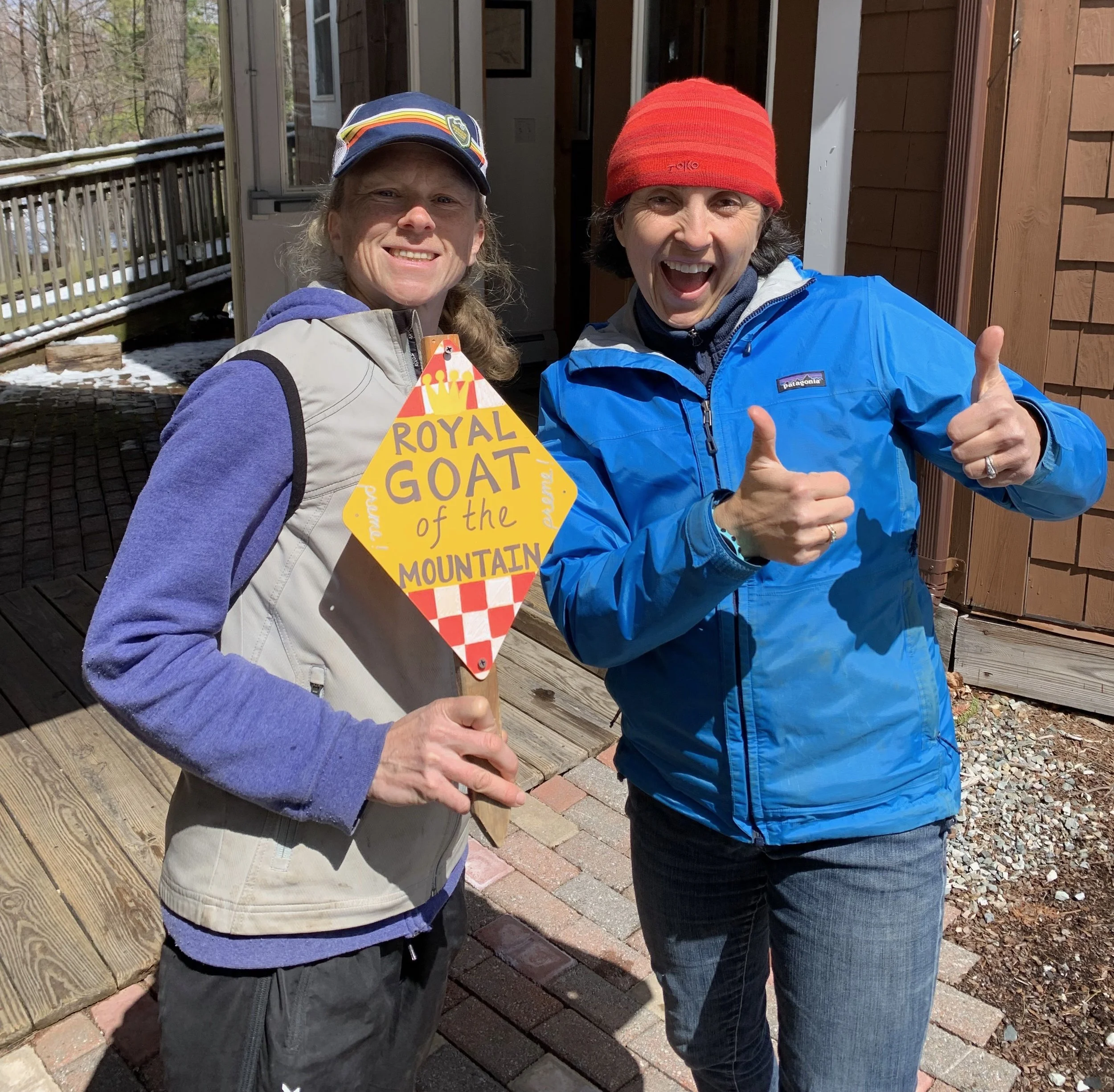
Kasie and her co-director Liz, ahead of the 2026 Sleepy Hollow Mountain Race
Through this annual process, I am reminded of how grateful I am for all the race directors and volunteers who do the same so that the races I love competing in as an athlete can exist. As I go through my annual rounds as race director, the thought cyclically occurs to me that everyone who participates in races should serve, at some point, as a race director - or at least get in the trenches as a volunteer. Usually this thought occurs to me after someone files a trivial complaint or asks for a last minute refund and I find myself wondering, “Do they realize how much time, energy, care and funds we’ve put into this?” Conversely, when someone goes out of their way to give thanks for all the work it takes to put on a race, I smile and think, “They get it. I bet they’ve been a race director themselves.”
My recommendation to each of you reading this is to find ways to volunteer at your local races, offer help, and consider putting on a race director hat if the opportunity arises. My race director hat of choice has a goat on it. And always remember to say a kind word of thanks to the folks behind the scenes.
Interested in becoming a race director?
Start by getting involved. Offer to volunteer at a local race and find out what is needed. Once you’ve established a relationship with a race director or organizing group, offer to serve as a co-race director. I have had experience solo and co-race directing and find it far more sustainable to co-race direct. Sometimes race directors walk away because they are burnt out on one or two specific parts of the role. With the right partnership, you can each put your energy into the tasks that you enjoy and let someone else do the bits you’d rather not. The other huge benefit of co-race directing is mentorship and succession planning. A healthy rotation of experienced race directors mentoring new race directors, who then gain and pass along their experience, prevents situations when a race disappears or has a complete organizational turnover as sometimes happens when a single race director can’t or chooses not to continue.
Resources:
Your local running club. Most local running clubs put on a series of races and are often in need of volunteers and new race directors.
The US Trail Running Conference’s Race Director Mentorship Program. I can’t find confirmation that this program is continuing into 2026, but attending this annual conference is recommended for anyone looking to learn about or connect with trail race event organizers at a national level.
Runners for Public Lands Race Directors Hub has a ton of resources for race directors interested in prioritizing community building and environmental stewardship.