
Favorite Workout: a skier finds speed on the track
by GRP skier Jack Young

Skiing in Sognefjellet, Norway just last week; better running = better hip position in skiing
Last year, I wrote a favorite workout blog about 10x1’ L5 running with poles. The post made it clear that this workout is quite ski-specific but that it could also be implemented in training for any other endurance sport. This year, I am going to write another post about a workout that I do specifically for skiing, but this time around, the workout is much more standard to the running community: 200m repeats at or faster than 800m pace.
For context, as a cross country skier who focuses on “sprints”, repeated 1.3k efforts that take anywhere from 2.5 to 3.5 minutes, I like to think my training can sometimes look quite similar to that of an 800m runner. Since there is rest in a sprint race on the downhills, the amount of working time in a ski sprint race is very similar to an 800m race on the track.

Flowers for growth through hard work inspiration
My weakness in cross country skiing is my classic skiing, and running is a very important part of classic sprinting. All in all, if I become a faster 800m runner, I’ve hypothesized that my classic sprinting will improve. I don’t know much about the nuances of training to become a better runner, but I do know that my favorite workouts consist of splitting a race into parts and then doing intervals of those parts at or slightly faster than race pace. So, in the context of an 800m race on the track, my favorite workout would be something like 8x200m with each rep being a little slower than 30”. It may be a bit unrealistic to predict my 800m time would be just over 2 minutes, but I hope that my speed and fitness would allow me to execute this workout at a faster pace than what I could actually do for the whole race.
What about rest? I haven’t discussed how much rest I like to take between my 200m reps. Personally, I am trying to train my running speed. This workout is not really designed to give me a fitness boost, so I am inclined to select more rest.
Another way of looking at it is that my goal is to improve the leg speed I can maintain for hills that are never longer than a minute in a cross country skiing sprint. Looking at it from this perspective allows me to see that more rest is the way to go, for it allows me to execute each rep with slightly higher quality. The downside is that I do not build any ability to work at this pace with a preexisting elevated heart rate or breathing rate, but I get plenty of this in my other training sessions. Additionally, no matter how long of rest I take - even if I take 3.5 minutes - I will still be carrying plenty of lactate into the later intervals.
The idea of taking longer rest for this workout brings me to my next point: I don’t want this workout to be very hard. When I put a workout like this on my training plan for the week, it exists with two other intensity sessions and a lot of volume of training. By going harder than 800m pace or taking less rest, I could quickly make this session quite taxing, but most weeks, I’ll have another important session the next day. I like this workout because it accomplishes a very specific task at a relatively low cost. Because running is one of my greatest weaknesses in skiing, it feels like a no brainer.
As for folks who are not professional cross-country skiers looking to improve their running technique in classic sprinting, this workout still has benefits. I really believe in “feel good” workouts for every type of athlete - professional to recreational - and this workout fits that description. If you are someone who enters the occasional 5k, this workout can be an excellent, low cost, speed session that will improve your running efficiency as a whole. This idea also extends to distances well above 5k.
Interval sessions do not always have to be hard, and in all honesty, most of the interval sets I do in my summer training are not all that hard to execute. In the summer I need to focus a lot of my energy on training a lot, and I simply don’t have the capacity to hammer intensity sessions 2-3x a week. Similarly, if you are a recreational runner who works 40+ hours a week, you may also not have the energy to really push in your intensity sessions. Workouts like this offer excellent bang for your buck, and they can be done with little time and little energy to spare.
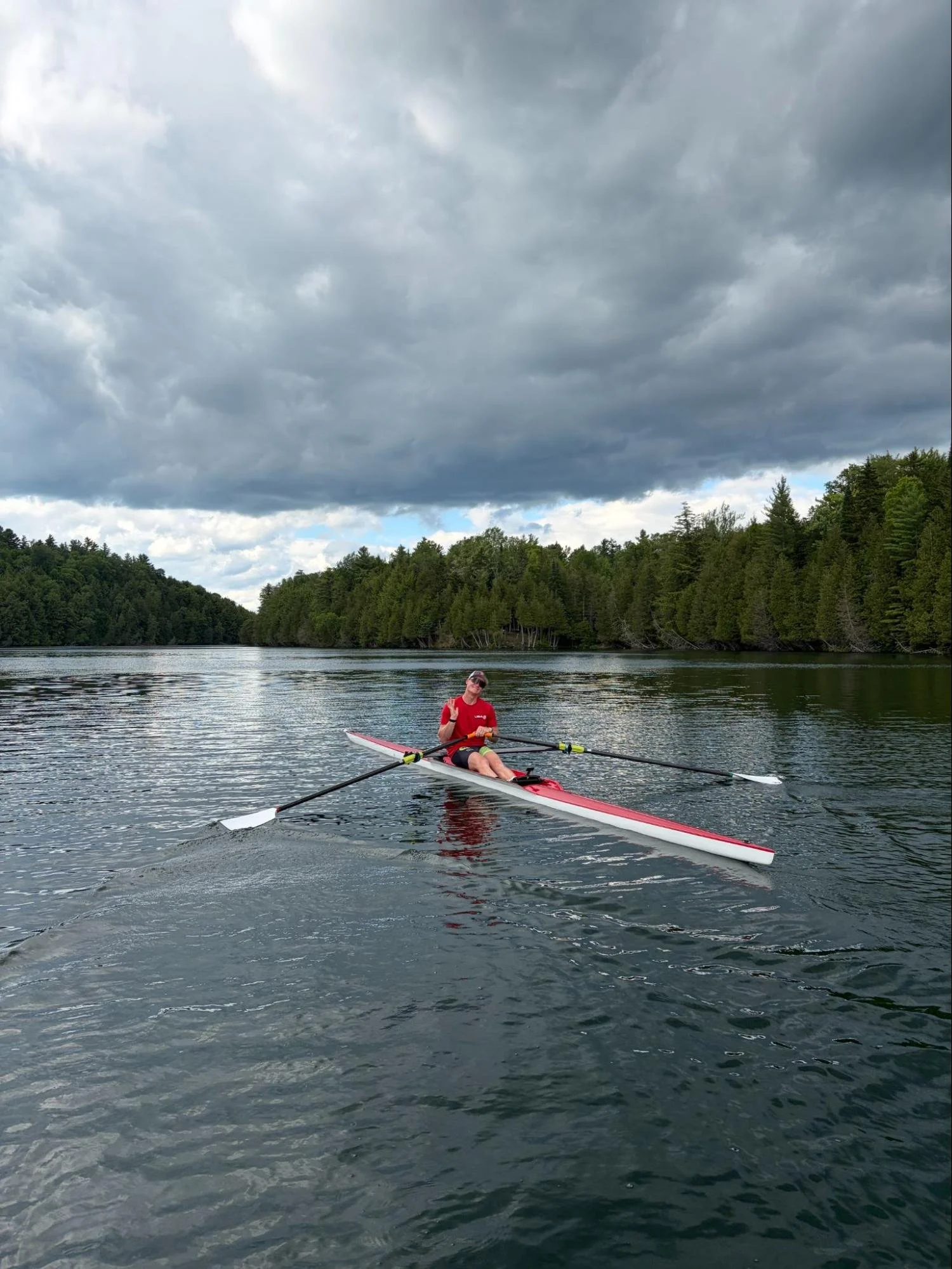
Rowing on the Hos in Craftsbury