
Move of the Month: Pull-ups
by GRP rower Sophie Calabrese
The pull-up is known as one of the most widely intimidating, yet impressive movements somebody can do in a traditional gym setting. Much like the push-up in my last blog, pull-ups don’t rely on external load or complicated setup, only your ability to move your own bodyweight with control. Pull-ups require pulling strength in the vertical plane, perhaps the most under-utilized movement the human body can do. This is exactly why it can feel challenging or even frustrating at first to work on improving your pull-ups.
Pull-ups require you to create tension through your trunk, control your shoulder blades, and pull with your upper body without losing your body positioning. These abilities carry over to benefitting your posture and shoulder health.
The move
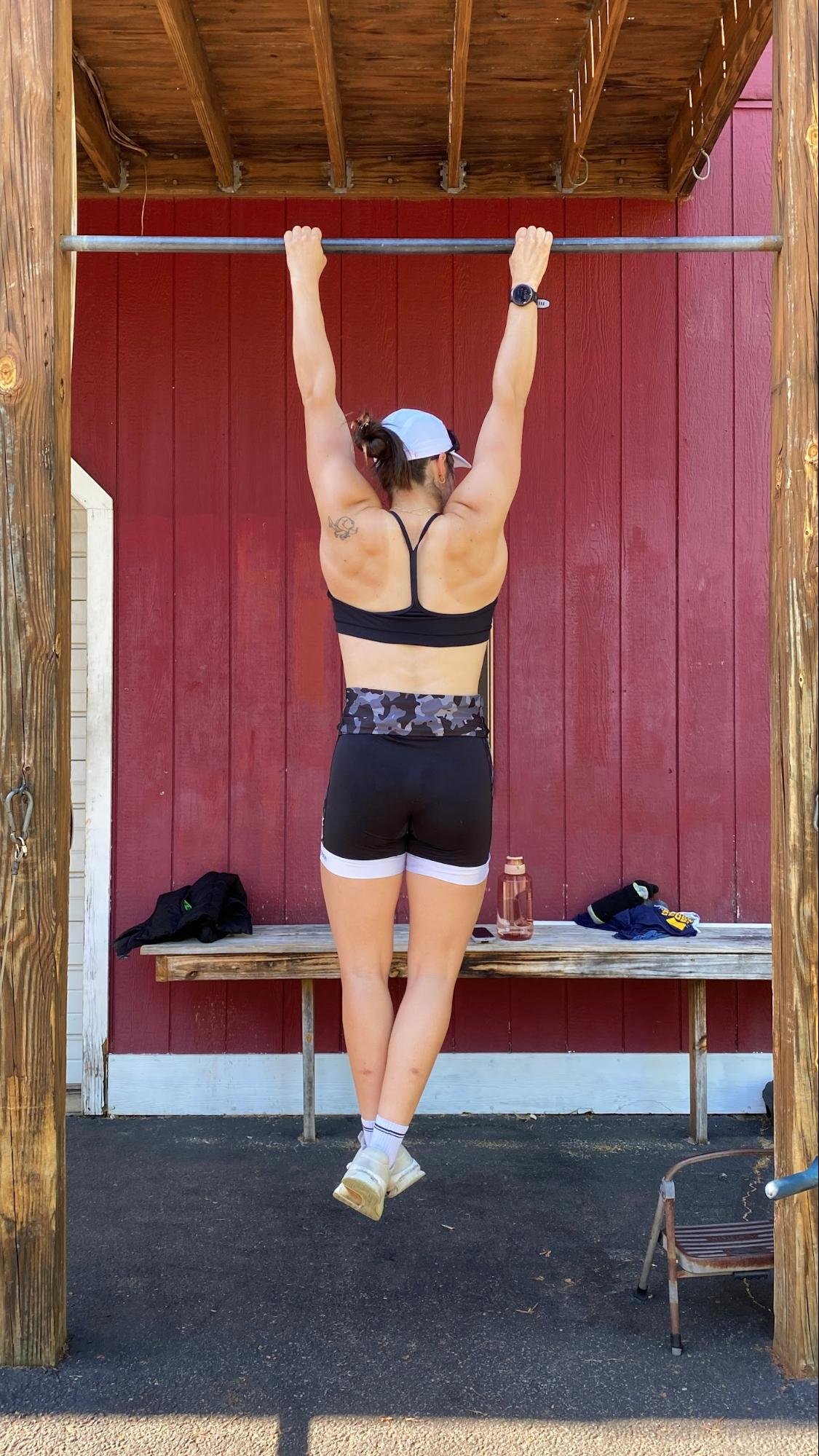
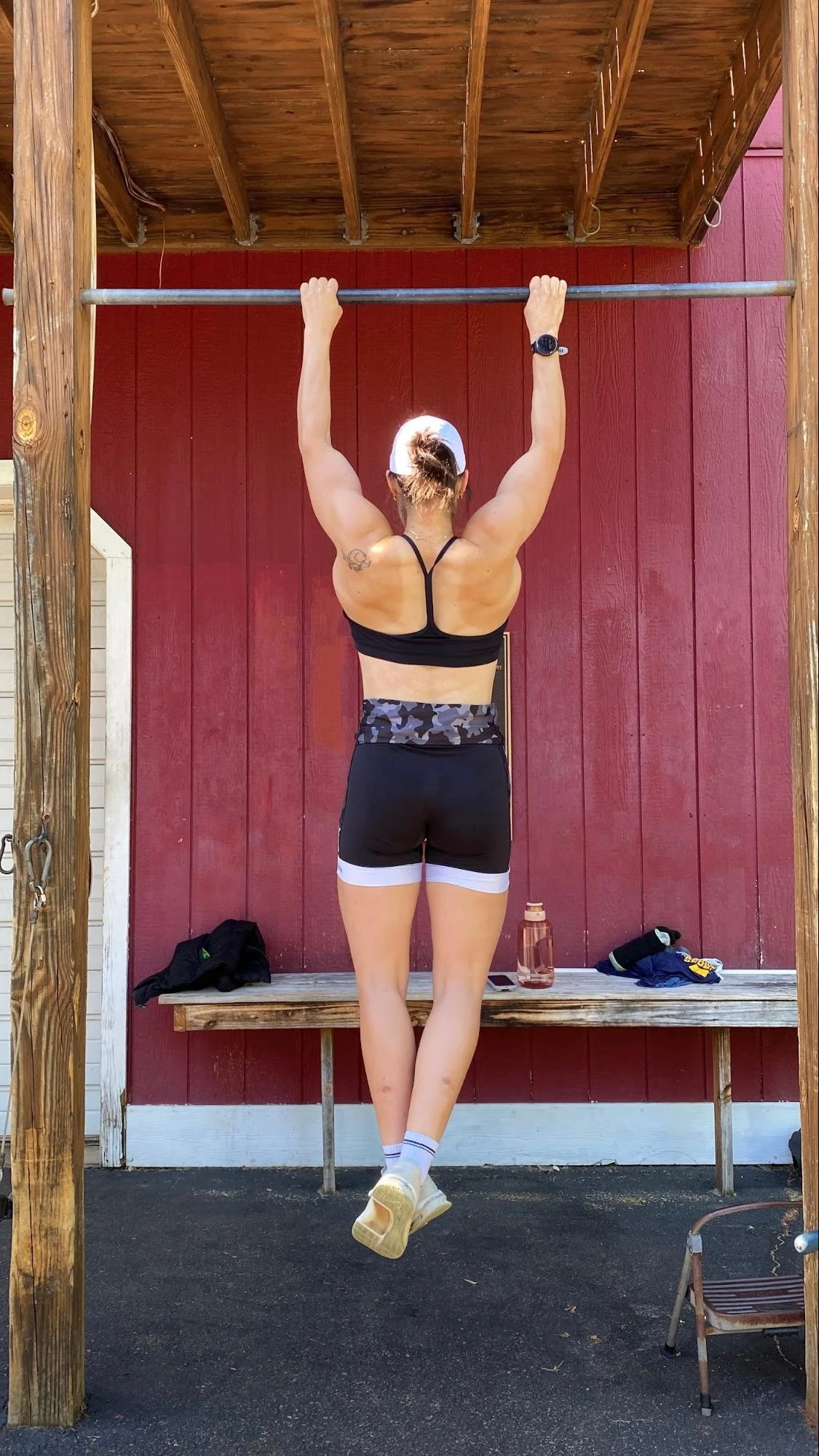
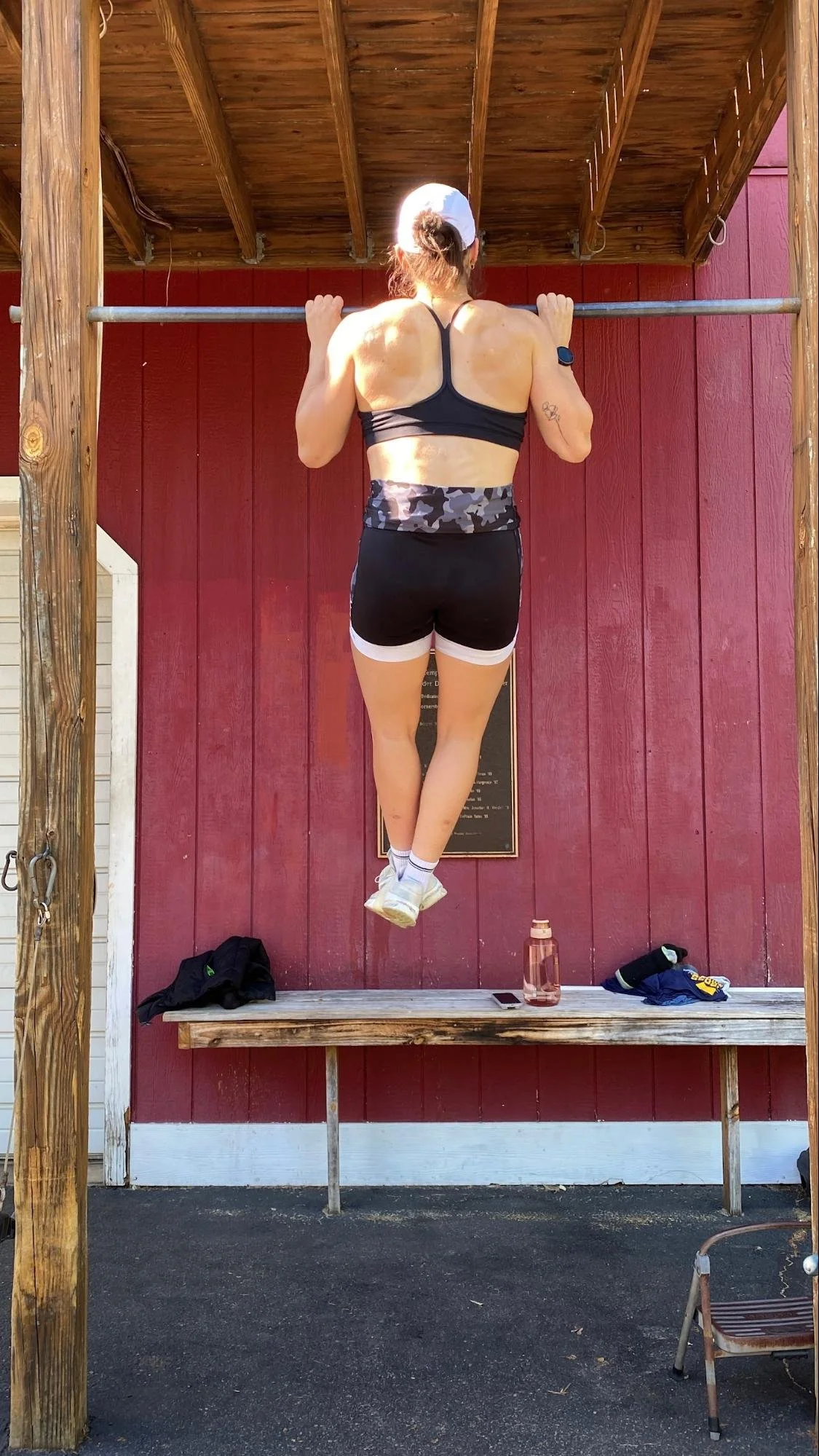
To start, actively hang from a bar and think “pull your shoulders down away from your ears”. From there, drive your elbows down toward your ribs as you pull your chest toward the bar. It helps some people to think about breaking the bar in half instead of pulling yourself up to the bar. Keep your ribs tucked and your body tight. At the top, think chest to bar, not chin reaching over it. When performed correctly, you’ll feel your back doing the work, not just your arms.
Where most people struggle is in how they initiate and control their pull-ups. They jump straight to pulling with the arms, shrug their shoulders up, or rely on momentum to get over the bar. Others cut the range short or lose tension through their core, turning it into a loose, inefficient rep.
Tips and tricks
The path to a quality pull-up is all about progression. If you can’t do one yet, start with assisted variations (this is where I’m currently at!). Bands, machines, or even foot-supported reps are great ways to do this. Eccentric pull-ups (a slow lower) are especially effective for building strength in the right positions. From there, work toward controlled full reps, then progress by adding pauses, tempo, or eventually load. Like the push-up, it’s all about owning each position and step along the way to a complete pull-up.
One of the simplest ways to improve your pull-up is by training your starting position. Dead hangs and active hangs build grip strength and teach you how to engage your shoulders properly. Controlling the hang is a great way to control the pull.
Programming-wise, a few quality sets go a long way. Try 3–5 sets of low-to-moderate reps with full control. Pair them with pushing movements for balance, or practice them more frequently at submaximal effort to build consistency. Progress might be slow, but stay in it and enjoy the process!