
Move of the Month: Push-ups
by GRP rower Sophie Calabrese
Maybe it’s just me, but thinking back to elementary school gym class, we were never taught how to do a push-up; only that we had to be able to do them. No machines and no setup, just you, the ground and how well you can move your body as one connected system. When it comes to this ability, most people aren’t limited by strength, but by coordination, stability, or control. That’s exactly what this blog is about.
The what and why of push-ups
At a brief glance, the push-up is a horizontal press, but more than that, it’s a full-body movement. Every rep asks you to stabilize your spine, control your shoulder blades, and generate force through your arms without losing these valuable positions. This ability shows up frequently in daily life. Getting off the ground or maintaining posture are just a few examples. If a push-up feels off, it’s usually exposing a weak link, not just weak muscles.
The move
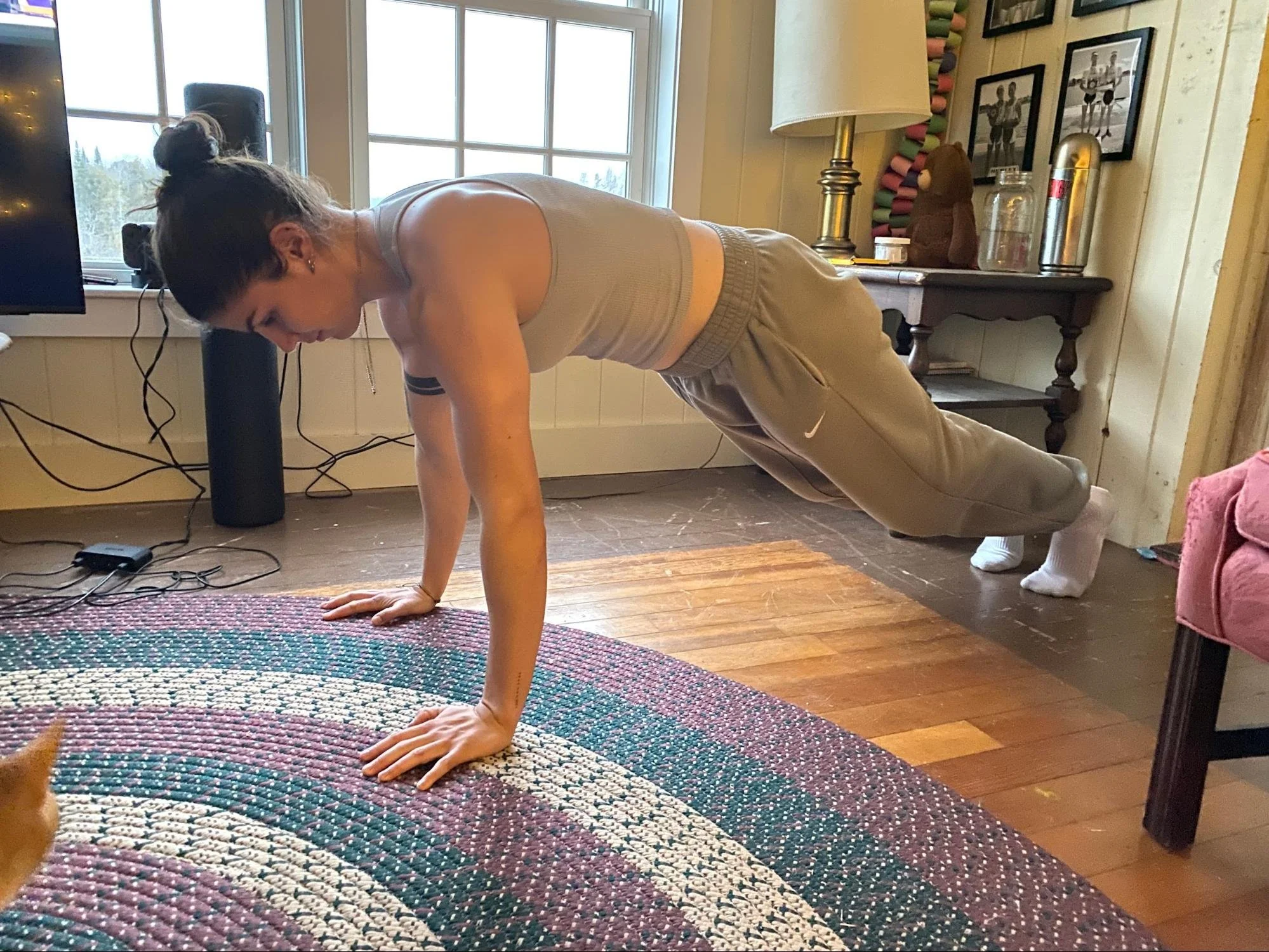
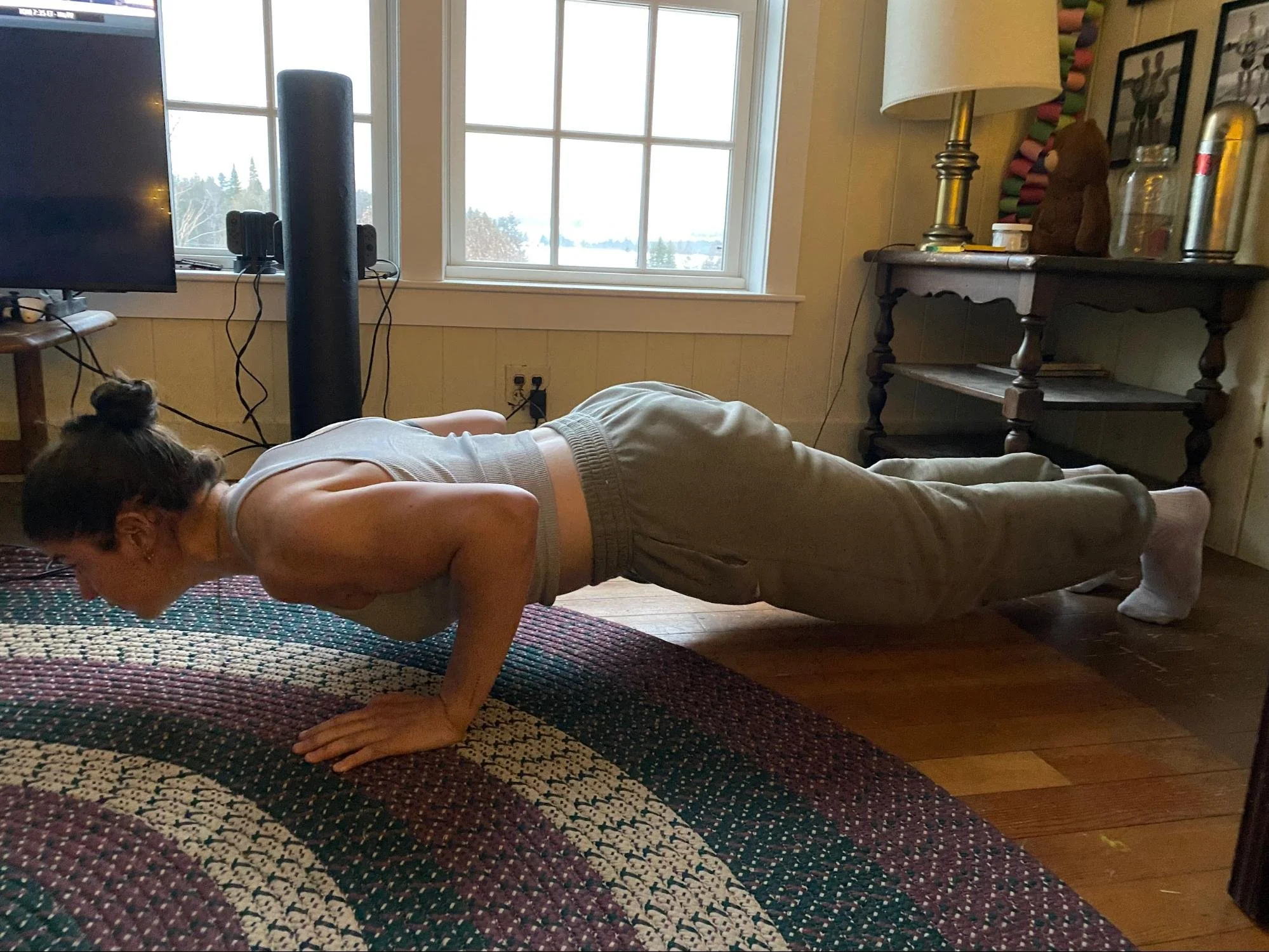
Here’s what you should be thinking about during a push-up: hands under shoulders, body in a straight line, ribs down, glutes tight. As you lower, think “controlled descent,” and as you press, “push the floor away.” Let your shoulder blades move naturally instead of locking them in place. When it’s right, your core is working just as hard as your arms.
Common mistakes
Most people lose this movement in the details:
Hips sag
elbows flare
reps get rushed
the neck reaches forward to finish the movement
Any of these turn what should be a powerful strength builder into something inefficient (or even stressful on the joints). Cleaning up even one of these mistakes can completely change how the exercise feels.
Adaptations
The good news is that push-ups are just as easy to progress than regress. If your full push-ups aren’t there yet, elevate your hands on a bench or slow down the lowering phase to build control. From there, you can progress to full reps, then add tempo, range of motion, or even explosive intent. The goal isn’t just to “do more,” it’s to own each step along the way.
Details
In terms of programming, keep it simple. A few controlled sets (6–12 reps) works well for strength, or pair them with rows of some sort for balance. You can even practice them more frequently at lower intensity to build consistency. It’s all about intention.
The push-up is a reflection of how well your body works together. It’s not about chasing big numbers or rushing through reps. It’s about control, tension, and awareness. Master that and you’ll build an ability and awareness that will carry through to other areas in your exercise journey.